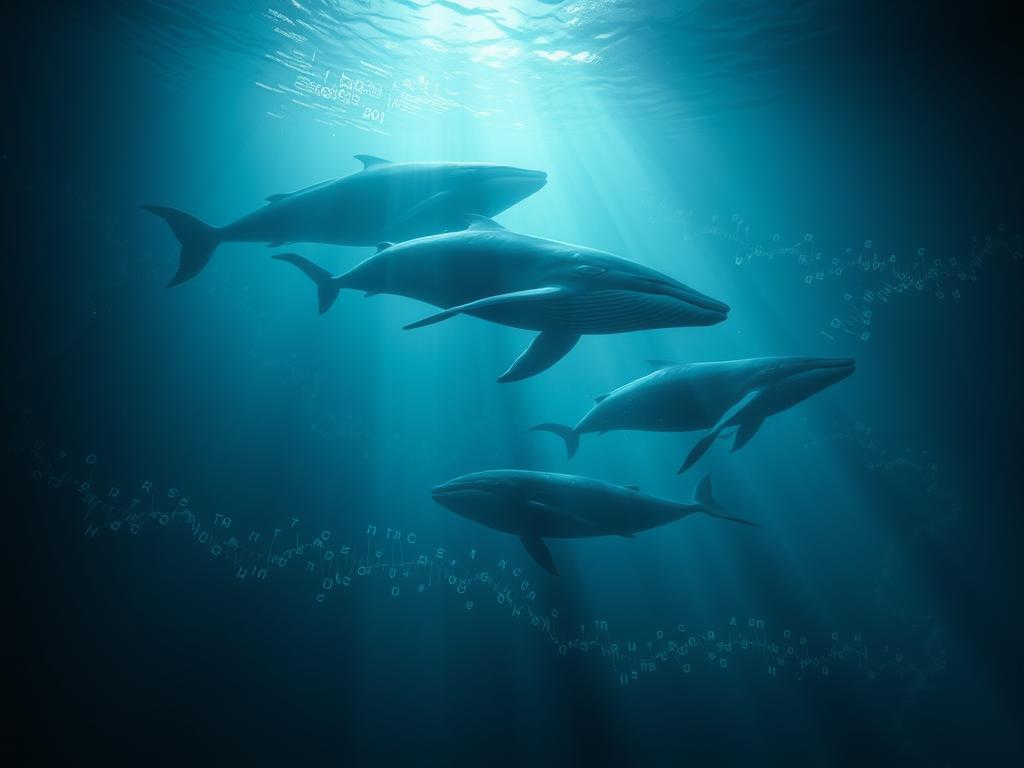
In a groundbreaking step towards decoding the mysteries of marine communication, scientists have uncovered fascinating linguistic patterns in sperm whale communication. Unlike any other marine species studied to date, sperm whales appear to communicate using a structured set of sounds akin to a complex alphabet. This discovery opens up the astonishing possibility that these majestic creatures employ a form of language that mirrors human speech in its complexity, potentially reshaping our understanding of animal communication.
Researchers have long speculated about the sophisticated nature of sperm whale communication, but recent advancements in artificial intelligence have finally allowed us to delve deeper into their world. By utilising advanced AI algorithms, scientists have been able to analyze the sonar-click patterns, often referred to as “codas,” utilized by sperm whales. These patterns appear to form a vast network of vocalizations that function similarly to the vowels and consonants in human language, offering new insights into their social interactions and cultural transmissions.
The implications of these findings are profound. Not only do they challenge the conventional view of animal intelligence and communication, but they also invite further inquiry into how these creatures interpret and store knowledge. If whales indeed possess a complex language, it suggests a level of cognitive sophistication previously unacknowledged. This could explain the intricate social structures and cooperative behaviors observed in whale pods, hinting at a rich tapestry of social dynamics driven by this newly discovered language-complexity.
From a technological standpoint, this achievement underscores the power of AI in advancing biological research. The ability to decode animal communication using machine learning models might pave the way for further breakthroughs in understanding non-human intelligence. As the algorithms become more refined, we might even anticipate fostering interactive dialogues with these creatures, potentially leading to collaborative conservation efforts that align human activities with the preservation of marine environments.
In conclusion, decoding the language of sperm whales not only broadens our comprehension of marine life but also highlights the shared complexities of communication in the animal kingdom. This discovery propels forward the notion that humans are not the sole purveyors of complex language systems on Earth. While there is much more to uncover, this linguistic breakthrough offers a profound reminder of our shared world, urging us to reconsider how we relate to the towering giants of the ocean.