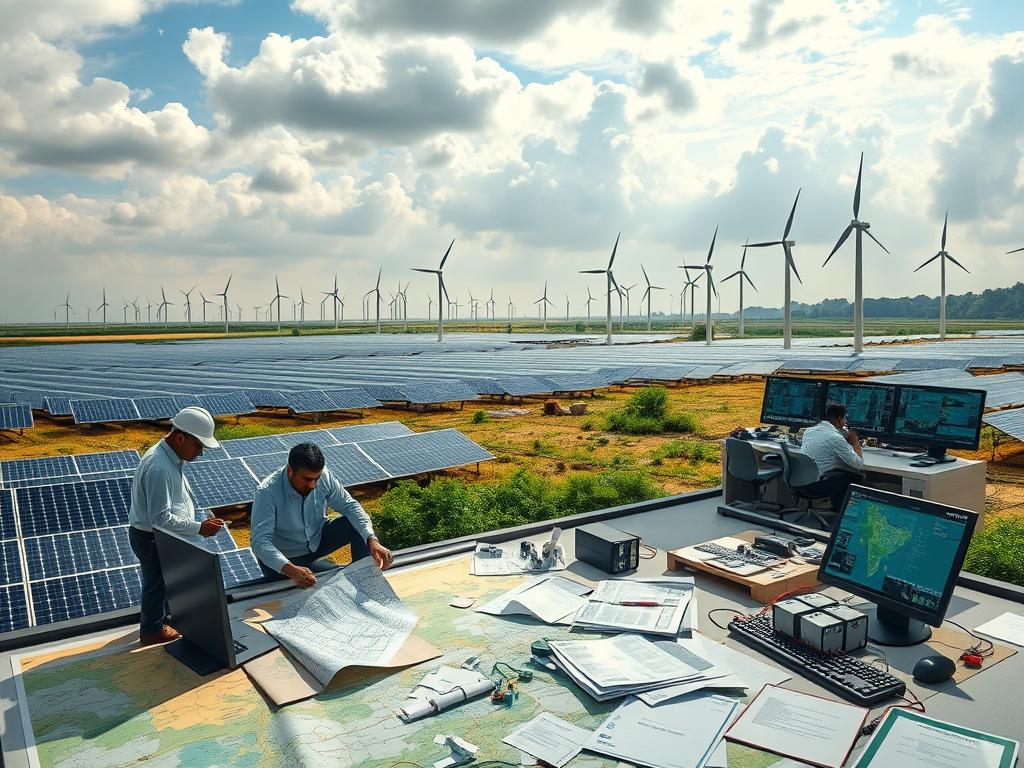
As the global call for sustainable energy intensifies, India finds itself at a crucial juncture with an ambitious renewable initiative facing unexpected hurdles. Recently, the renewable energy ministry commenced a thorough audit of delayed green energy projects, each uniquely hampered by the absence of crucial power sale agreements (PSAs). With 43.9 gigawatts of awarded projects lingering in uncertainty, this move highlights the complexity and dynamism inherent in transitioning towards a more sustainable energy matrix.
The current bottleneck arises amidst a significant shift in market demand, where stakeholders now increasingly favor continuous renewable power paired with storage solutions. Such a paradigm shift underscores a growing recognition that renewable energy, to be truly viable, must offer reliability and consistency. This strategic pivot not only impacts new energy production but also necessitates refined frameworks for storage to ensure that energy is not just abundant but also accessible regardless of time or season.
This audit, expected to unravel its findings within the next 30 to 45 days, serves as both a diagnostic and therapeutic effort by the government. The ministry’s decision to evaluate each stuck project individually reflects a nuanced approach to policy-making, one that could pave new pathways for negotiations between energy producers and potential buyers. By understanding the root challenges each project faces, the authorities aim to unlock long-term solutions that align market demands with infrastructural capabilities.
Insights gained from this assessment are anticipated to inform not only immediate corrective actions but also broader legislative frameworks that shape future endeavors in India’s green energy landscape. The need for comprehensive policies that encompass both generation and storage becomes imperative as India charts its course towards renewable energy supremacy. The government, through meticulous planning and strategic implementation, seeks to reinforce its commitment to the climate agenda while overcoming operational roadblocks.
In conclusion, this detailed auditing process marks a pivotal moment in India’s renewable energy journey. It highlights the importance of agility and innovation in policy design to address emerging industry challenges. As India continues to stride forward in its energy transition, the lessons learned from this audit may well become vital educational resources for other nations aspiring to balance their energy aspirations with practical realities. The vision for a greener future demands not only technological advancements but also adaptive governance willing to evolve with the changing tides of energy needs.