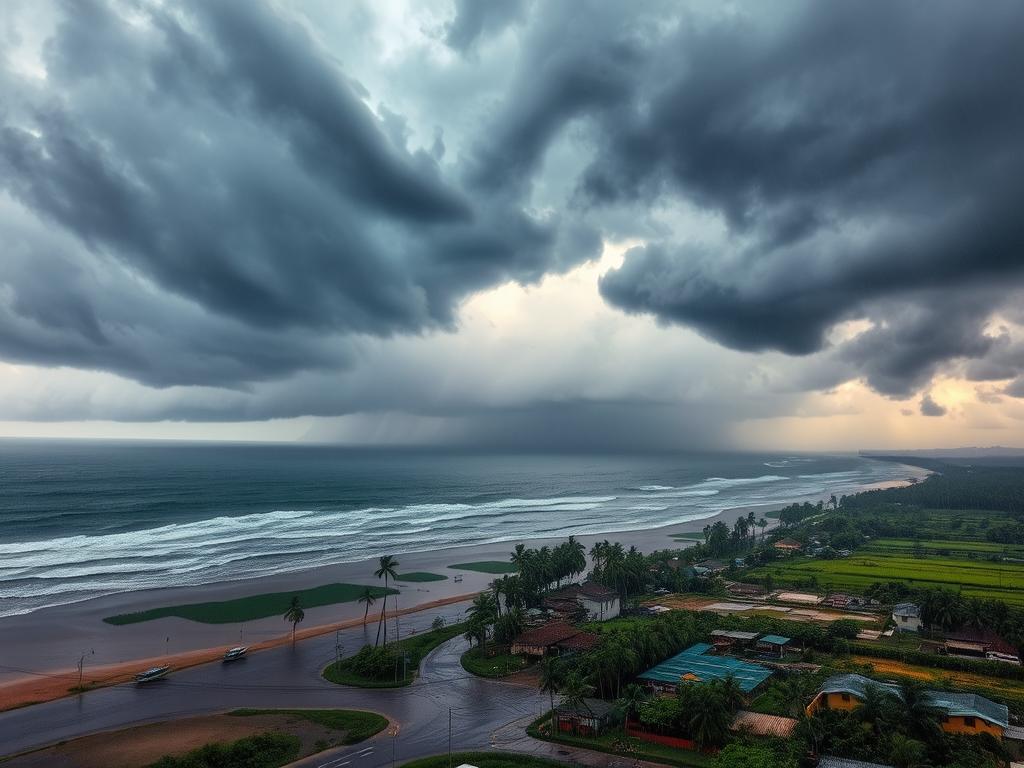
As regions in Andhra Pradesh brace for the aftermath of Cyclone Ditwah, the weather holds promise of both caution and relief. Despite its recent weakening, the storm system is set to burden areas like Tirupati, Nellore, and the broader Rayalaseema region with heavy rainfall. The Indian Meteorological Department’s forecast reveals that while the cyclone’s ferocity has diminished, it still holds significant sway over the state’s weather patterns.
Cyclone Ditwah’s journey across the Bay of Bengal might have lost its initial intensity, but its presence is undeniably impactful. The spate of rains expected to hit the coastal regions indicates a prolonged period of vigilance for local communities. This weather scenario urges residents to remain alert and prepared, especially as the rainy spells could disrupt daily life and complicate local economies reliant on clear skies.
The IMD has put forth advisories for fishermen, cautioning them against venturing into the sea, a decision both prudent and necessary given the unstable weather conditions. The hazards posed by the lingering effects of Cyclone Ditwah remind us of nature’s unpredictability and the importance of adhering to expert guidance for safety. As the coastal areas and their inhabitants prepare, it’s a testament to the resilience often required to weather such climatic challenges.
Meanwhile, Rayalaseema stands on a different note, poised for weather challenges on a different level. This region, with its unique topographical features, could face flash floods or waterlogging, complicating an already delicate balance of agriculture and infrastructure. These potential outcomes underline the need for effective disaster management protocols and community cooperation to minimize adverse effects on this vibrant yet vulnerable landscape.
Ultimately, Cyclone Ditwah is a reminder of the dual nature of climatic events—destructive yet humbling in its exhibition of power. As Andhra Pradesh navigates this wet spell, the need for community solidarity coupled with advances in predictive meteorology becomes evident. In confronting such meteorological phenomena, it is paramount that we not only react but also actively engage in planning and preparing for future events. As we anticipate calmer skies, let this experience be a catalyst for fostering resilient communities better equipped to handle nature’s whims.