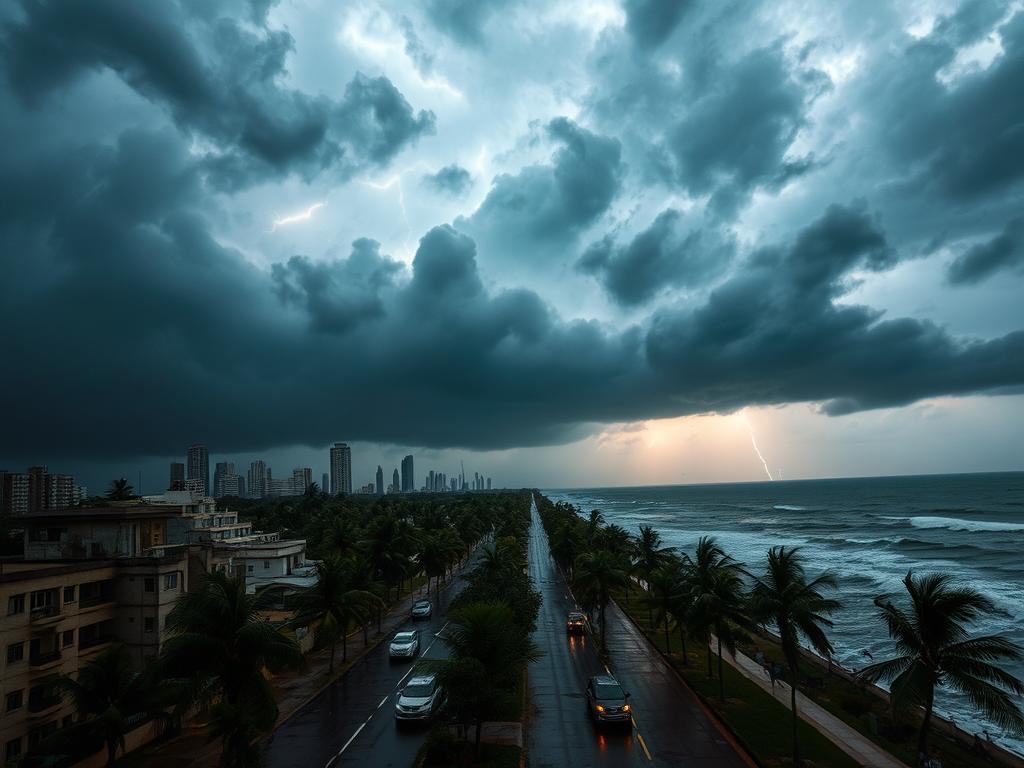
As Cyclone Ditwah edges closer to the southern coast of India, the anticipation mixed with caution is palpable among the residents of Tamil Nadu and Puducherry. Known for its distinctive and dynamic weather patterns, this region once again finds itself bracing for the impacts of a significant weather phenomenon. The Indian Meteorological Department has responded to the imminent threat by issuing a ‘Yellow’ alert, underscoring the need for residents to stay informed and prepared.
This alert is a vital tool in meteorological communication, serving as a precaution for several districts, including the bustling metropolitan backdrop of Chennai. The forecast suggests an onset of light to moderate rainfall paired with thunderstorms, setting a somber mood across affected areas. Such weather patterns, while not unusual for this time of the year, serve as a stark reminder of nature’s unpredictable temperament.
The ‘Yellow’ alert is a call to action for both public officials and the general populace. Local authorities are ensuring that emergency services are on standby, while residents are advised to secure their homes and seek shelter. It’s a period where communal spirit merges with personal responsibility, as communities prepare to face the possible havoc that Cyclone Ditwah might unleash.
Historically, cyclones in this region have demonstrated the dual nature of being a natural spectacle and a potential harbinger of disaster. This underscores the importance of understanding both the scientific elements and the social dynamics involved in such events. Effective communication from meteorological departments plays a crucial role in mitigating risk and minimizing casualties, reminding us of the power of science when merged seamlessly with community action.
As we await Cyclone Ditwah’s full impact, it serves as a poignant reminder of humanity’s delicate dance with nature. The advancements in meteorology provide a foundation for safety and preparedness, yet the true resilience lies within the communities’ ability to unite and respond. It highlights the balance between respecting natural phenomena and taking proactive steps to protect lives and property. Ultimately, this situation fosters a sense of shared responsibility and global citizenship among those within the storm’s path and beyond.