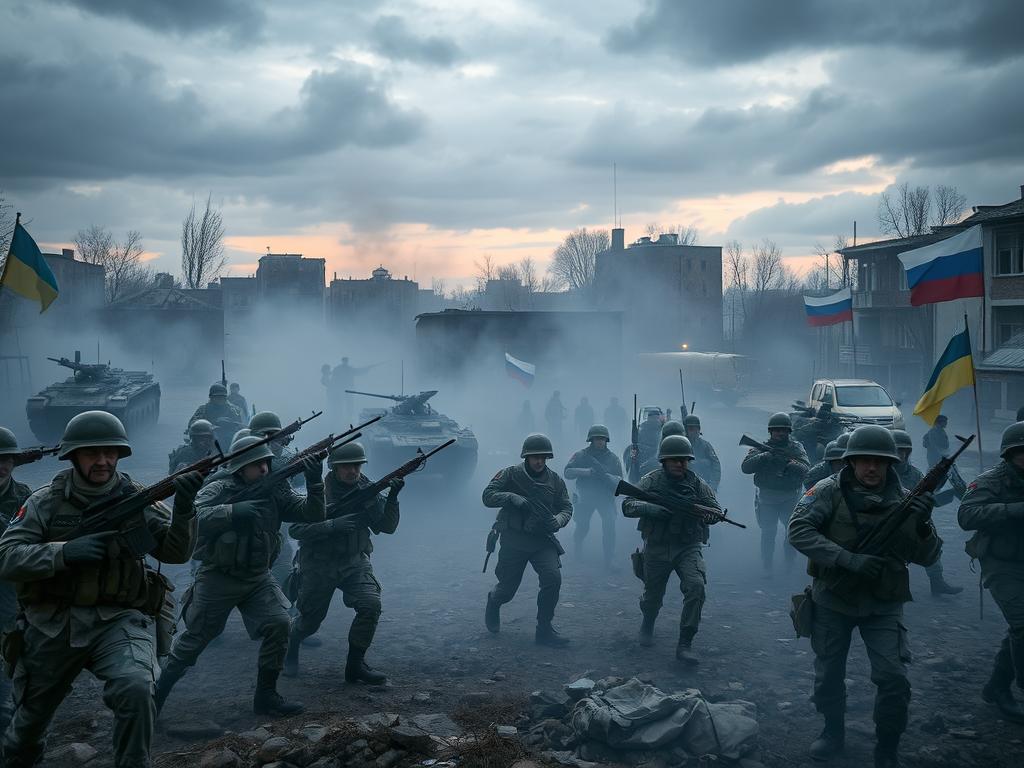
In the midst of an ongoing and fierce military conflict, Russian President Vladimir Putin recently claimed that Russian forces have successfully encircled the Ukrainian city of Pokrovsk. This city, strategic in its positioning, has become a flashpoint that underscores the intense confrontation between the two nations. While such claims from Putin are intended to signal strength and territorial gain, it’s crucial to cross-examine these assertions with reports from the ground, which often tell a more nuanced story.
In stark contrast to the Russian assertion of dominance, Ukraine’s own military leadership has painted a different picture. Kyiv’s top general highlighted ongoing efforts by Ukrainian forces to repel Russian advances with considerable determination. Reports from the Ukrainian frontlines suggest that their military hasn’t just been passively defending but actively pushing back against the encroaching Russian forces. This gives a more optimistic view of the resilience and tenacity of the Ukrainian military, who have been galvanized by international support.
These conflicting narratives point to a broader strategy often employed in warfare: the battle of information. Russia’s declaration of having besieged Pokrovsk can be seen as part of a psychological strategy aimed at demoralizing Ukrainian forces while solidifying domestic support among its own citizens. Conversely, Ukraine’s counter-narrative aims at bolstering internal morale and swaying international sympathies towards its struggle. In such scenarios, the truth often lies somewhere between these strategic narratives.
For the residents of Pokrovsk and other embattled regions, these narratives translate into a day-to-day reality filled with uncertainty and fear. While both nations’ official channels attempt to control the story, civilians continue to face disruptions, displacement, and the dire consequences of protracted warfare. Humanitarian efforts are thus crucial in alleviating some of these hardships, serving as a reminder of the human cost of ongoing geopolitical conflicts.
As the situation around Pokrovsk unfolds, it serves as a reminder of the complex dynamics that govern modern warfare. Beyond the battlefield skirmishes and territorial claims, the battle for perception remains ever critical. Ultimately, the stories we hear and the truths we choose to accept shape not only international policy decisions but also the lives of countless civilians caught in the crossfire. As the conflict continues, the hope for a peaceful resolution remains a beacon for all those yearning for stability and harmony in the region.