In the lush, vibrant heart of Belém, Brazil, COP30 witnessed a pivotal moment in global climate dialogue. The UN Global Compact’s engagement here was instrumental, seamlessly integrating business, finance, government, and the UN system in a determined stride towards decisive climate action. This confluence was not just about talking; it was about translating lofty ambitions into tangible realities. With a strategic focus on credible transition plans and climate resilience, stakeholders worked to bring the next generation of Nationally Determined Contributions (NDCs) from concept to implementation.
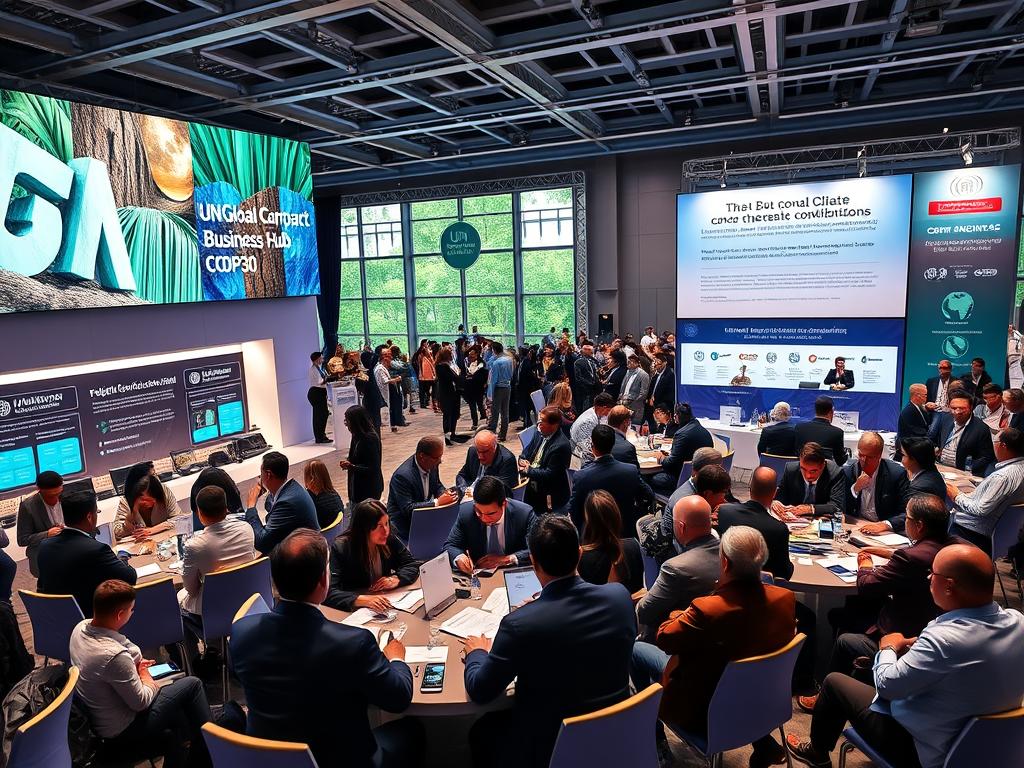
The UN Global Compact Business Hub, nestled within the COP Blue Zone, served as a dynamic epicenter for innovation and action. It was at this junction that the 13th Annual High-Level Meeting of Caring for Climate took place, a collaborative effort with UNEP and UNFCCC that underscored the crucial role of the private sector in executing national climate agendas. The sessions were a hotbed for practical discussion, addressing how these global goals could be woven into the fabric of everyday business practices and policy-making.
A highlight of the proceedings was the official UN side event on public procurement, co-organized with UNOPS, UNEP, FAO, and UNIDO. Discussions revolved around leveraging public procurement, which constitutes 13–30% of GDP in several countries, as a powerful tool to fortify climate ambition within contracts and supplier engagements. This illustrates how governments can enforce climate resilience and inclusivity through fiscal strategies, spotlighting public procurement as a pivotal driver for global climate goals.
The collection of insights and strategies born from COP30 sets a comprehensive roadmap for the future. The focus on integrating sustainable practices into business models emphasizes that industry cannot merely be spectators but must be active players in achieving global climate targets. With sessions that translated these ambitious goals into workable strategies for businesses, innovative pathways were developed that empower companies to meet the demands of modern environmental challenges.
As COP30 concludes, it is evident that the event was a step forward in consolidating efforts across sectors to fight climate change. The gathering proved that when different sectors unite with commitment and clarity of purpose, translating climate ambitions into executable actions becomes less daunting. This collaborative spirit is crucial, and moving forward, maintaining this momentum is vital. Only through continued partnerships and commitment can the world hope to meet its climate goals and ensure a sustainable future for generations to come.