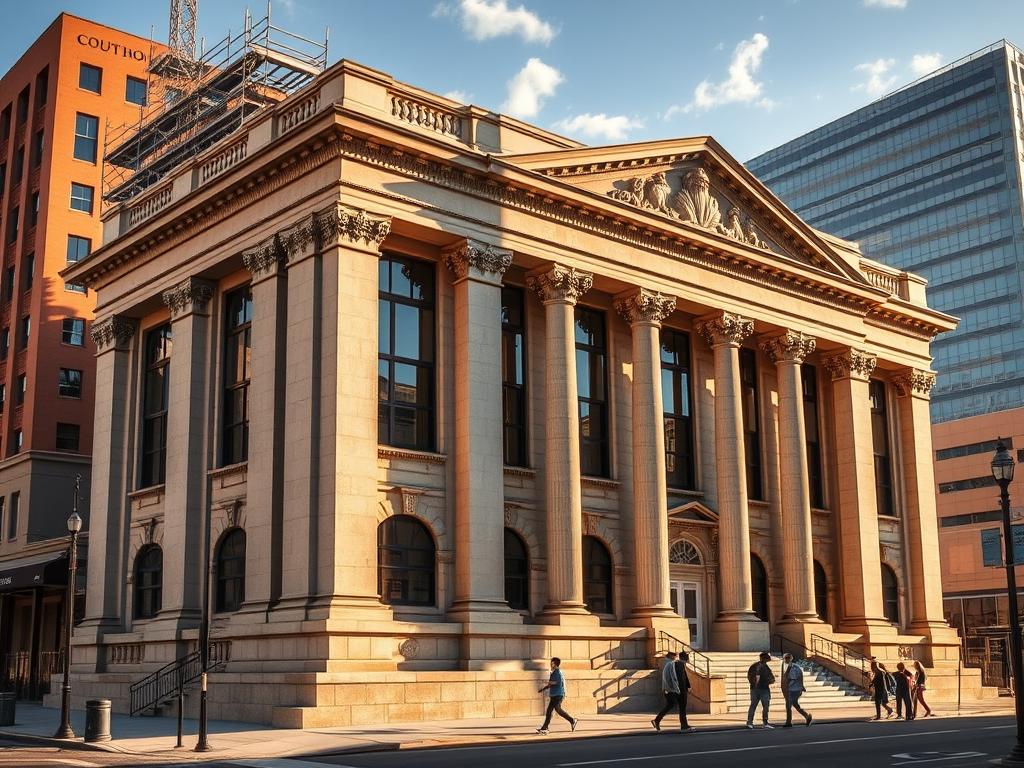
In the heart of Clarksburg, West Virginia, a nearly century-old courthouse is set to undergo significant renovations. This grand edifice has stood as a beacon of justice and civic pride since 1932. When it first opened its doors, it was a symbol of modernity, embracing the bustling progress of the early 20th century. Now, the courthouse is poised to once again capture that spirit of advancement while preserving its historical essence.
The U.S. Post Office/Federal Judicial Center isn’t just a building; it’s a time capsule of an era when its original patrons might have arrived in the latest automobile and interacted within its walls with a sense of new possibility. Yet, like many structures of its age, it faces the dual challenge of maintaining historical integrity while meeting the demands of contemporary use. As the renovation plans unfold, there is an exciting opportunity to blend the past with the future in a way that respects the courthouse’s storied history.
Renovating such a historic structure involves far more than a simple facelift. It requires a thoughtful approach that honors the building’s architectural pedigree, ensuring that modern updates do not overshadow its original features. This strategic renovation should consider key elements like energy efficiency, accessibility, and technological upgrades that align with present-day standards. The project can serve as a model for preserving historical buildings by demonstrating how old-world charm can coexist with modern necessities.
The courthouse’s restoration signifies more than just physical upgrades. It represents an investment in the community’s cultural heritage and identity. As cities grow and change, preserving these historical landmarks maintains a tangible link to the past, providing residents with a sense of continuity and belonging. The courthouse’s rejuvenation could potentially act as a catalyst for further revitalization efforts in downtown Clarksburg, attracting visitors, businesses, and residents thrilled to be part of the city’s ongoing story.
In conclusion, the upcoming renovation of Clarksburg’s courthouse is a celebration of both history and progress. Such projects are crucial as they ensure historical landmarks remain both relevant and functional in contemporary settings. By respecting the building’s heritage while embracing necessary modernizations, the renovation will breathe new life into this iconic structure. As Clarksburg admires its past and builds toward its future, the courthouse’s transformation is a pivotal step in showcasing the town’s commitment to preserving its architectural treasures for generations to come.