





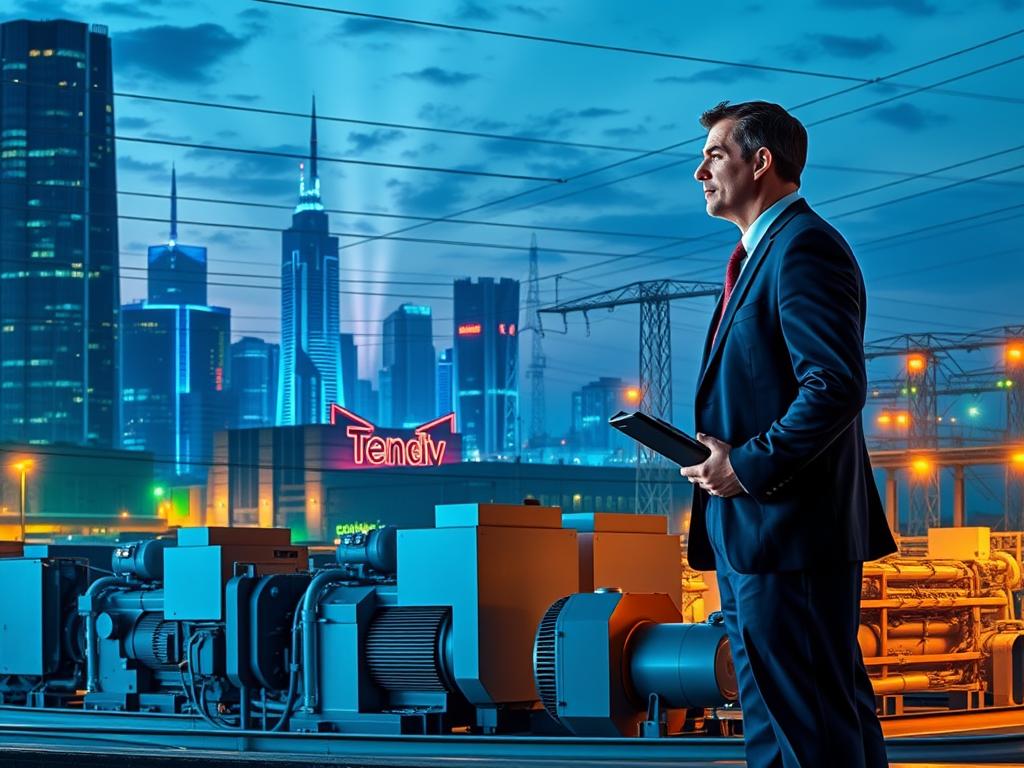
The United States is facing a crucial moment in its energy landscape. With regional grids increasingly pressured by soaring electricity demands from the burgeoning data-center industry, the need for innovation in energy solutions has never been more critical. Energy Secretary Chris Wright has proposed an inventive concept that could significantly bolster grid capacity by utilizing the untapped industrial diesel generators scattered across various commercial sectors such as data centers and big-box retailers.
This proposal comes as a creative yet practical response to the challenges faced by the country’s energy infrastructure. Tapping into the existing network of diesel generators could act as a temporary support system, effectively bridging the gap until newer forms of power generation are available and operational. These generators, while primarily designed as backup systems, have the potential to alleviate some of the pressure on already strained grids without the need for immediate large-scale construction projects.
Utilizing these idled generators offers a unique short-term solution that could produce immediate benefits. Not only does this approach take advantage of already available resources, but it also aligns with the necessity for rapid intervention. The proposition by Secretary Wright signifies a proactive step in energy management, suggesting that every available asset should be deployed to sustain the nation’s energy demands effectively. The flexibility of this solution ensures that it can be implemented swiftly, thus avoiding some of the bureaucratic and logistical delays that often accompany new generation developments.
However, while this interim solution offers promise, it is not without challenges. There are legitimate concerns regarding emissions from diesel generators and whether their environmental impact might counterbalance their utility. Hence, any implementation must be complemented by strategies that minimize these impacts, possibly by integrating cleaner technology or deploying only in critical, high-demand scenarios. It also raises questions about logistics, such as the maintenance and readiness of these generators that may have been idled for extensive periods.
In conclusion, Secretary Wright’s initiative symbolizes a forward-thinking approach in tackling America’s growing energy needs. Although primarily a stopgap, using industrial generators reflects an adaptable strategy capable of providing temporary relief during critical periods of demand. This proposal not only underscores the necessity for creative problem-solving within the sector but also highlights the importance of keeping diverse energy solutions open and ready, as the nation moves toward an increasingly electrified future. The journey towards a sustainable and resilient grid will undoubtedly involve a mosaic of solutions, with each playing its distinct role in the broader energy narrative.