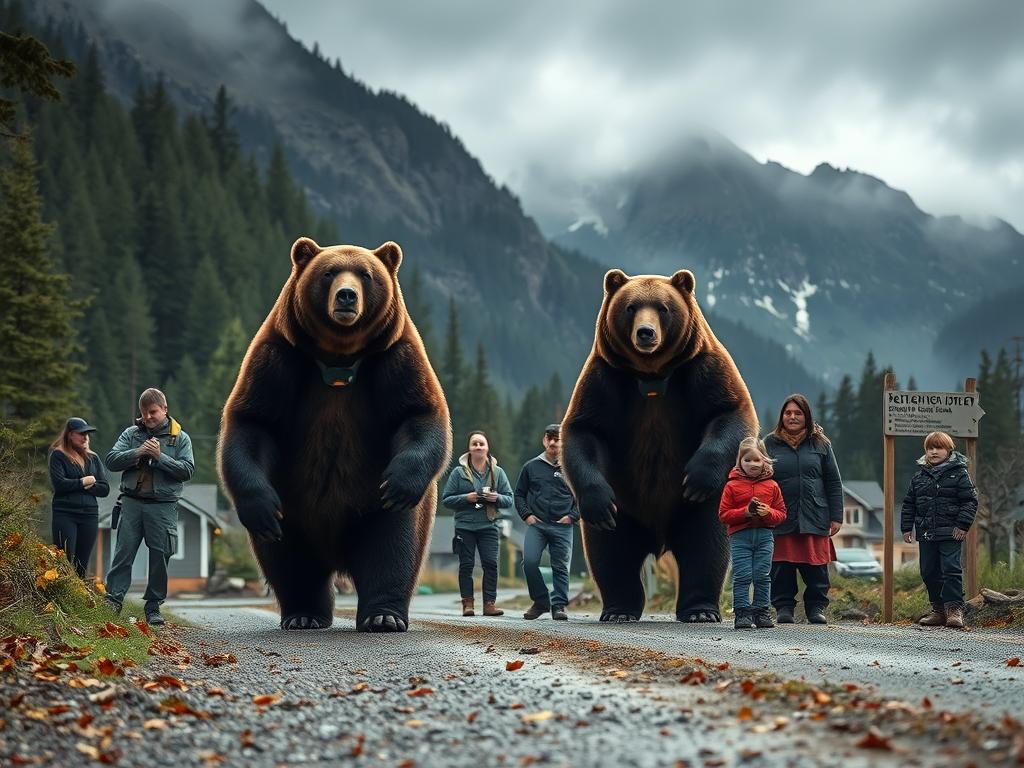
In a serene corner of British Columbia, the tranquility of nature was recently shattered when a grizzly bear attacked three schoolchildren, leaving the community of Bella Coola on high alert. As investigators comb the area to isolate the culprit, two other grizzlies captured in the vicinity have been fitted with tracking collars and relocated. This development raises important questions about wildlife conservation and community safety, highlighting the delicate balance between preserving nature and protecting human lives.
The Bella Coola Valley, renowned for its majestic landscapes and rich biodiversity, also serves as a habitat for a substantial population of grizzly bears. These mighty creatures, while awe-inspiring, have shown increasingly bold behaviors as their natural boundaries with human communities blur. The recent attack has rekindled discussions on the need for proactive measures to mitigate such conflicts. By relocating the two grizzlies, authorities aim not only to avert another potential tragedy but to better understand bear movements and influence future conservation efforts.
Fitting the bears with tracking collars represents a key step towards more informed wildlife management strategies. This technology facilitates continuous monitoring, offering insights into grizzly behavior and habitat use. For conservationists, these tools can significantly improve the implementation of coexistence measures, such as community education and strategic placement of attractant management systems. The data collected will be invaluable in crafting policies that protect both the bears and local residents.
While some advocate for stringent measures against aggressive wildlife, others call for deeper investment in understanding the root causes of such incidents. Habitat loss, climate change, and food scarcity are critical factors often driving wildlife into human domains. Before solely attributing blame to the bears, it is worth considering how human activities might inadvertently provoke such encounters. By addressing these underlying issues, communities might foster a safer coexistence with their wild neighbors.
In conclusion, the grizzly incident in Bella Coola serves as a stark reminder of the complex relationship between humans and the wildlife sharing their environment. As authorities continue the search for the attacking bear, the ongoing efforts to relocate and monitor others highlight the commitment to finding sustainable solutions. Ultimately, safeguarding communities while ensuring wildlife thrives demands a nuanced approach, resting on education, technological advancement, and a profound respect for nature’s intrinsic value.