






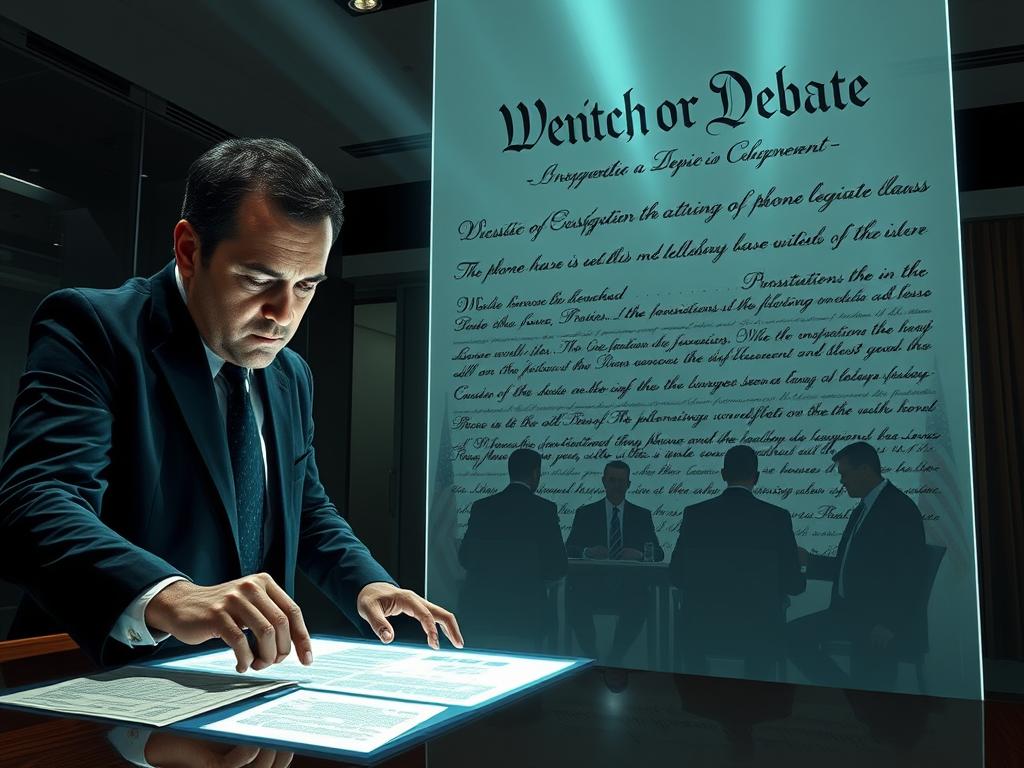
The recent revelation that Jack Smith’s team cautiously anticipated potential legal battles over their pursuit of senators’ phone records underscores the intricate interplay between scrutinizing officials and respecting constitutional safeguards. As investigators tread carefully, it shines a light on the difficulties facing legal teams when governmental oversight intersects with civil liberties guaranteed by the Constitution.
At the heart of this complex situation is the Constitution’s Speech or Debate Clause, which provides broad protections for legislative activities, aiming to shield lawmakers from interference as they perform their duties. This foundational element serves both as a shield and a sword, guiding the legal pathways through which investigations of public officials must navigate without overstepping or undermining the democratic processes.
Jack Smith’s team, aware of these legal tripwires, exemplifies a mindful approach, knowing full well the potential ramifications of crossing constitutional boundaries. By considering these challenges beforehand, they demonstrate a prudent strategy that seeks to balance the demand for accountability with the rights granted to senators to perform their roles without undue intrusion.
Nonetheless, the pursuit of transparency and accountability through phone records is a critical facet of democratic oversight, representing the public’s right to know. It raises the question of how far investigations can go to ensure integrity without compromising the legislative protections intended to prevent political weaponization of legal tools. This scenario ultimately tests the resilience of democratic institutions and their ability to adapt and respond to the evolving demands for transparency.
In conclusion, the delicate dance between upholding constitutional rights and ensuring accountability requires a careful, nuanced approach from legal practitioners. While the actions of Jack Smith’s team may face scrutiny, they reflect an essential effort to balance these dual imperatives, challenging us to rethink how legal frameworks can adapt in our complex, modern political landscape.