






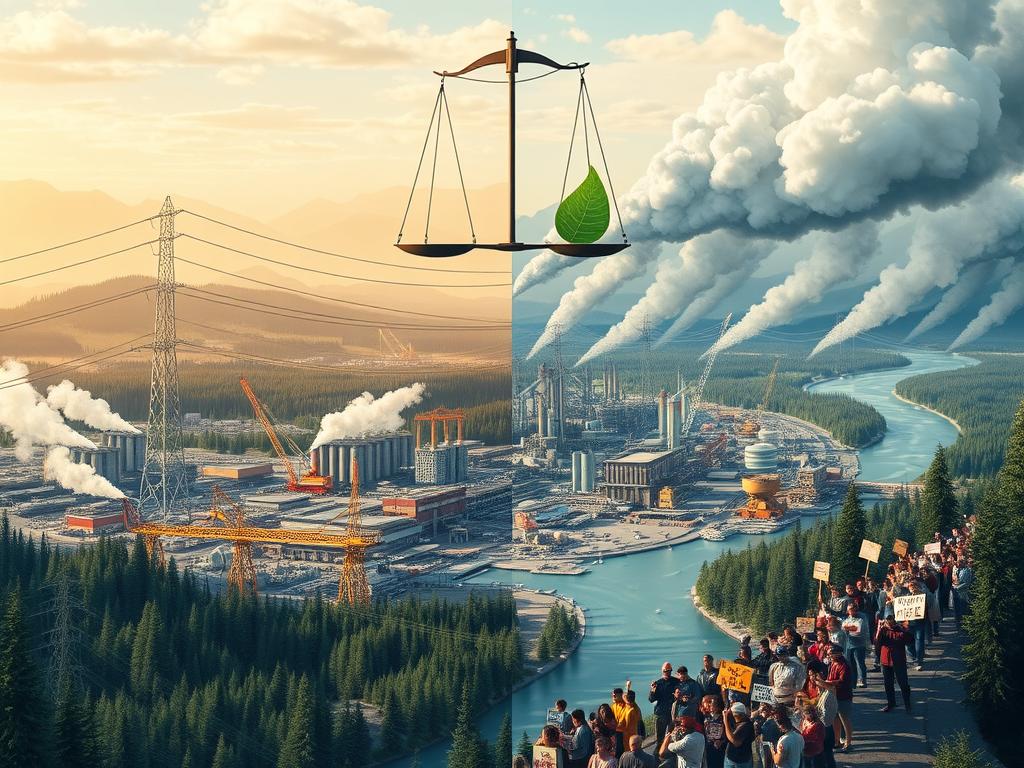
In an era where energy demands are skyrocketing, British Columbia finds itself in the intricate dance of balancing industrial growth with sustainable energy distribution. Faced with an influx of requests from powerful industrial sectors, the province has taken the extraordinary step of bypassing traditional regulatory avenues. This bold move is not merely about building new transmission infrastructure but more intriguingly, about who gets priority access to the province’s energy resources.
The decision to circumvent regulators highlights the urgency and magnitude of the demands on B.C.’s energy grid. Major industrial players, particularly those involved in resource extraction and processing, are clamoring for more power to fuel their operations. Given the critical nature of these industries to British Columbia’s economy, there’s an understandable push to meet their needs swiftly. However, this raises questions about who gets precedence when competing interests arise, and whether such prioritization compromises other sectors or future sustainability.
Building new transmission lines is not just a physical undertaking; it’s a financial and environmental balancing act. As B.C. focuses its energy allocation on significant resource projects, there’s an implicit message being sent about the strategic direction of provincial policies. It suggests a prioritization of short-term economic gains, potentially at the cost of long-term environmental goals, an issue that could become contentious among environmental advocates and local communities who might find themselves sidelined.
The province’s energy strategy could be seen as a microcosm of larger global challenges: the friction between rapid industrial expansion and the need for sustainable resource management. As B.C. navigates these waters, it becomes a critical case study for other regions grappling with similar issues. How does a community balance prosperity with responsible growth? The choices made today in British Columbia could set precedents far beyond its borders, potentially influencing international approaches to energy distribution and environmental stewardship.
Ultimately, British Columbia’s proactive steps underscore a crucial point in modern resource management — the delicate art of balance. Whether this approach proves prudent or problematic in the long run will depend on how the province manages to reconcile the growing needs of its industrial players with its commitments to sustainability and equitable energy distribution. One thing remains certain: as demands continue to mount, innovative solutions and thoughtful governance will be key to ensuring that the province’s energy future is both vibrant and responsible.