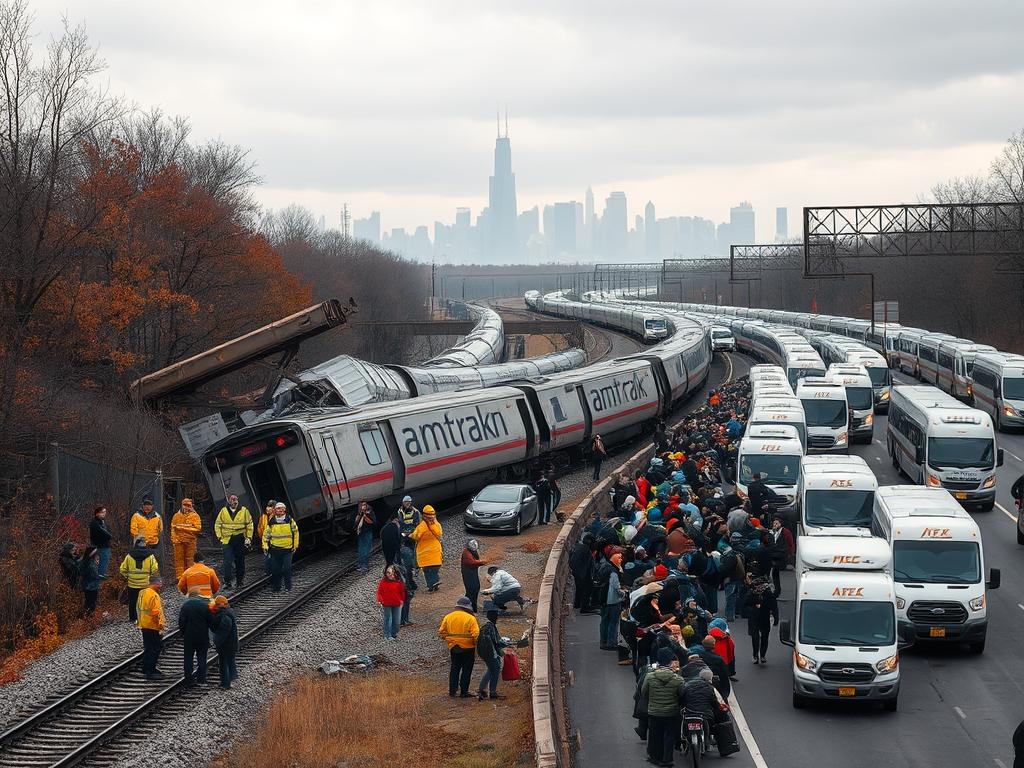
In a grim reminder of the challenges that accompany holiday travel, an Amtrak train derailment near Chicago has thrown a wrench into the Thanksgiving plans of over two hundred fifty passengers. This disruption comes at a time when transportation networks are juggling one of the year’s heaviest workloads, underscoring the unpredictability of travel during peak season.
The derailment occurred at a critical junction in the rail network, a stone’s throw away from America’s bustling Windy City. The timing couldn’t have been worse, as families across the nation are eager to reunite for the holiday. As often is the case in large-scale travel disruptions, passengers found themselves caught in a swirl of confusion and frustration, not knowing when and how they would reach their destinations.
Amtrak, for its part, has been operationally proactive, swiftly deploying a fleet of buses to transport the stranded passengers to their destinations. This course of action, although necessary, brings its own set of complications. Road transport, while a lifesaver, lacks the efficiency and comfort of rail travel, particularly during a peak period typified by traffic jams and inclement weather conditions.
One must commend the speedy response and logistical precision in handling the aftermath of the derailment. Nonetheless, this incident sparks a broader discussion on the infrastructure challenges facing American railroads. In an age where high-speed rail dominates other parts of the world, the U.S. remains laboriously dependent on aging rail systems that struggle under the weight of modern travel demands.
As the holiday season unfurls, this incident serves as a potent reminder to travelers and policymakers alike about the need for resilient and advanced transportation networks. While the immediate priority remains getting passengers home safely for Thanksgiving, the long-term vision must focus on enhancing the reliability and efficiency of rail travel. Only then can we hope to transform travel disruptions from norm to exception in the years to come.