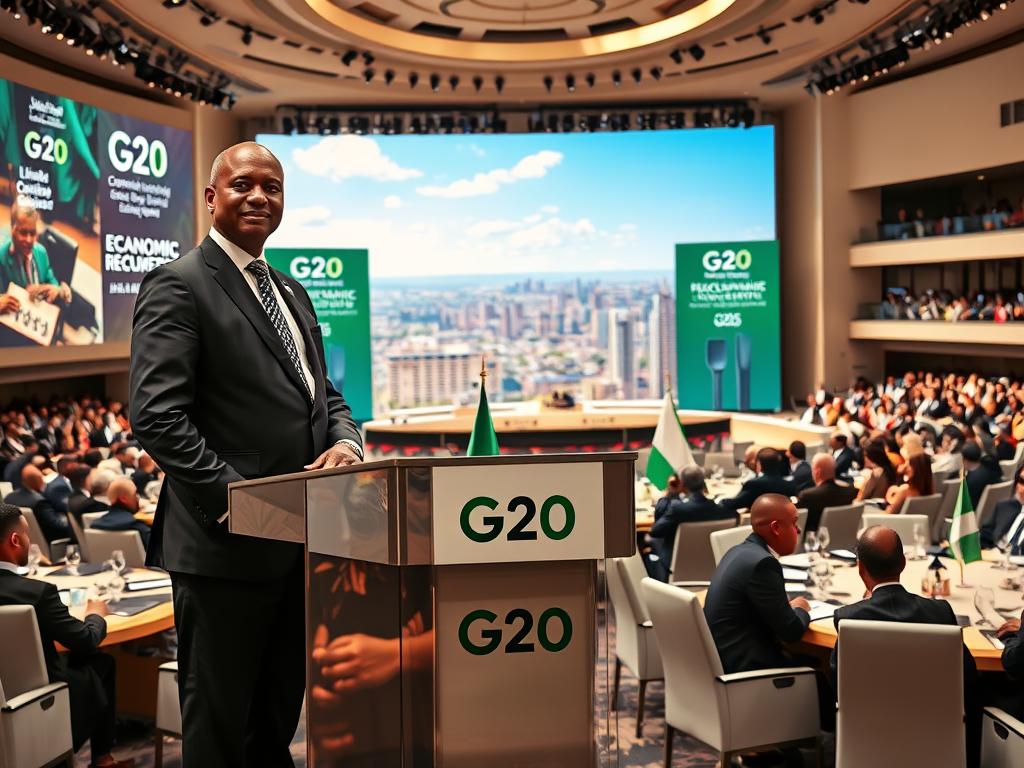
As global leaders gather to deliberate on the most pressing economic challenges of our time, Vice President Kashim Shettima finds himself shouldering significant responsibility. He has departed from Abuja to represent Nigeria at the highly anticipated 2025 G20 Leaders’ Summit in Johannesburg, South Africa. This move comes as President Bola Ahmed Tinubu prioritizes domestic concerns, opting to stay back in Nigeria to attentively address urgent security issues in the states of Kebbi and Kwara. Such a shift in plans underscores the delicate balance that national leaders often have to maintain between international duties and homefront demands.
President Tinubu’s decision to remain in Nigeria, despite an invitation extended personally by South Africa’s President Cyril Ramaphosa, illustrates the weight of internal affairs on his administration. It also reflects the trust and confidence he places in Vice President Shettima to adequately represent Nigeria’s interests on the world stage. This shift is a testament to the dynamics of leadership where delegation becomes not just a necessity, but a skill in navigating the intricate web of domestic and international responsibilities.
The G20 summit in Johannesburg is poised to be a significant event, bringing together a pantheon of economic powers and prominent global institutions. As the world grapples with issues like economic recovery, climate change, and sustainable development, the summit provides a crucial platform to foster collaboration and consensus. For Nigeria, active participation in such global discussions is vital, providing opportunities not only to contribute to global problem-solving but also to advocate for Africa’s economic and social priorities.
Vice President Shettima’s role at the summit will undeniably be pivotal. Representing one of Africa’s largest economies, his presence offers Nigeria a voice among the world’s most influential decision-makers. His task will be to articulate and advocate for policies that reflect both the continent’s aspirations and the unique developmental challenges faced by Nigeria. His ability to engage with other leaders and effectively communicate Nigeria’s perspectives will be closely watched both at home and abroad.
In conclusion, this episode highlights the complex interplay of local and global responsibilities that come with national leadership. As Nigeria navigates its security issues at home, the global stage remains an essential arena for pursuing long-term national interests. The decision to send Vice President Shettima to the G20 underscores not just the importance of diplomatic engagement, but also the versatility required from its leaders. As the summit unfolds, all eyes will be on how Nigeria’s diplomatic strategy is shaped in this high-stakes international environment.