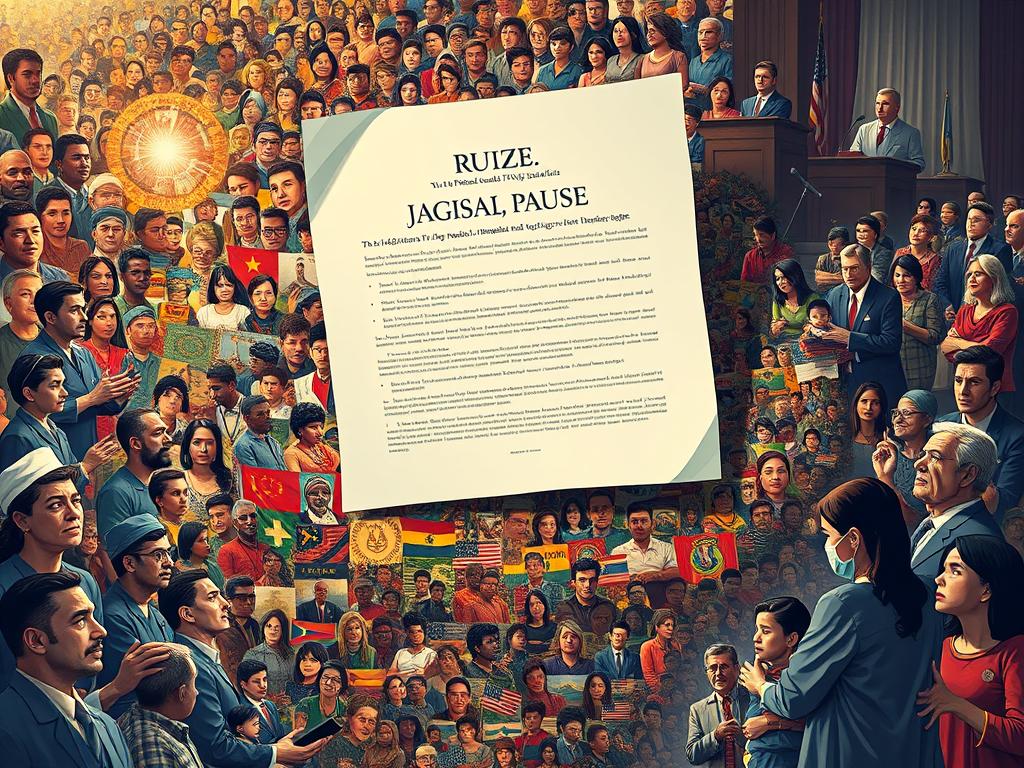
Migration has always been a cornerstone of the American narrative, shaping the country’s identity and socioeconomic landscape. However, recent statements by former President Donald Trump concerning a ‘permanent pause’ on immigration from economically disadvantaged nations signal a dramatic shift in this narrative. The proposal not only seeks to halt future migration but also aims to revoke the legal status of millions already in the United States, presenting a multifaceted challenge laden with legal, social, and humanitarian implications.
The proposition to halt migration from less affluent countries raises several pivotal questions about America’s role as a beacon of hope and opportunity. Historically, the United States has been seen as a land of refuge, offering a fresh start for those escaping poverty and persecution. Halting migration from poorer nations could undermine these values and send a global message that economic hardships are no longer a valid reason to seek refuge in America. Such a policy could significantly alter the country’s demographic and cultural fabric, which is woven rich from threads of diverse immigrant stories.
This proposed policy change comes amid debates on national security and economic stability. Trump has tied immigration to various societal issues, including crime, suggesting that reducing immigration could alleviate these problems. However, numerous studies have shown that immigrants contribute positively to the economy and are less likely to commit crimes than native-born citizens. Immigrants often fill essential roles in healthcare, agriculture, and technology sectors, suggesting that their contributions are integral to maintaining the country’s competitive edge.
Legal experts warn of the challenges inherent in revoking legal statuses en masse. There are questions about the constitutional validity of such actions and the potential for protracted legal battles. Additionally, the humanitarian aspect cannot be ignored—many of these immigrants have deeply rooted lives in the United States, often with families who are citizens or permanent residents. The emotional and social costs of uprooting these individuals could be immense, further fueling division within communities.
As the United States grapples with these complex issues, the conversation around immigration must evolve to prioritize both national interests and humanitarian obligations. Thoughtful policy-making, underpinned by facts and empathy, is crucial. As a nation built on the foundations of diversity and opportunity, America faces the challenge of balancing security and prosperity with its moral duty to remain a place of refuge for the world’s most vulnerable. The path forward lies in finding harmony between these seemingly opposing values.