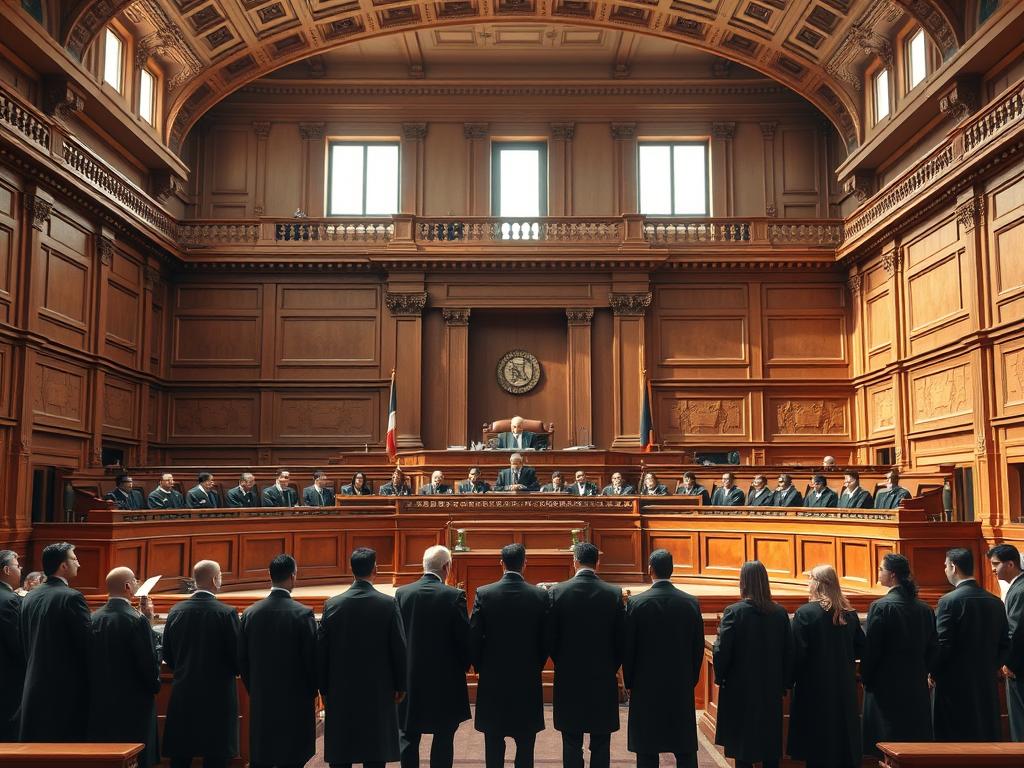
The Supreme Court of India has recently issued a significant directive that has the potential to reshape the dynamics within the nation’s legal corridors. In a groundbreaking move, the court has declared that senior advocates are no longer allowed to orally mention cases before any bench. This statement comes as a definitive shift in the long-standing tradition where senior counsels enjoyed the privilege of oral mentions, which often served as an expedited gateway for cases deemed urgent or priority.
This decision underscores a commitment to formalize and streamline the legal process. Traditionally, the latitude given to senior counsels to mention cases directly to the bench was perceived as a nod to their experience and understanding of legal urgency. However, for some, it represented a soft spot in the procedural armor, potentially allowing ambiguity in how urgency was defined and potentially leveraged. This new direction aims to ensure equality and clarity in the way cases are presented and processed, providing a more structured approach to handling urgent appeals.
From an analytical perspective, this shift can be seen as part of a broader reformative wave within the judiciary, aiming to enhance transparency and reduce any inadvertent favoritism or perceived inequity. By instituting a more standardized method, the court is encouraging legal practitioners to adhere strictly to protocol, ensuring that all cases, irrespective of representation, are subjected to uniform procedures. This aligns with global best practices where judicial processes emphasize impartiality and transparency.
Critics may argue that removing oral mentioning from senior advocates could slow down the urgent case redressal process, previously expedited by their authoritative mention. However, proponents would counter that this measure levels the playing field for all lawyers and their clients, fostering a fairer judicial environment. The measure also underscores the quintessential balance that the judiciary seeks to achieve between efficiency and equity, reinforcing the sanctity and accessibility of legal provisions for all involved.
In conclusion, India’s Supreme Court continues to navigate the complex interplay of tradition and reform, embodying a judiciary system that is both adaptive and rooted in fairness. As the legal community adjusts to this new directive, it is crucial for all stakeholders to embrace these changes with an open mind. While the ramifications of this decision will unfold over time, its intent to uphold justice and equality within legal processes can only serve to strengthen the judiciary’s credibility in the long run.