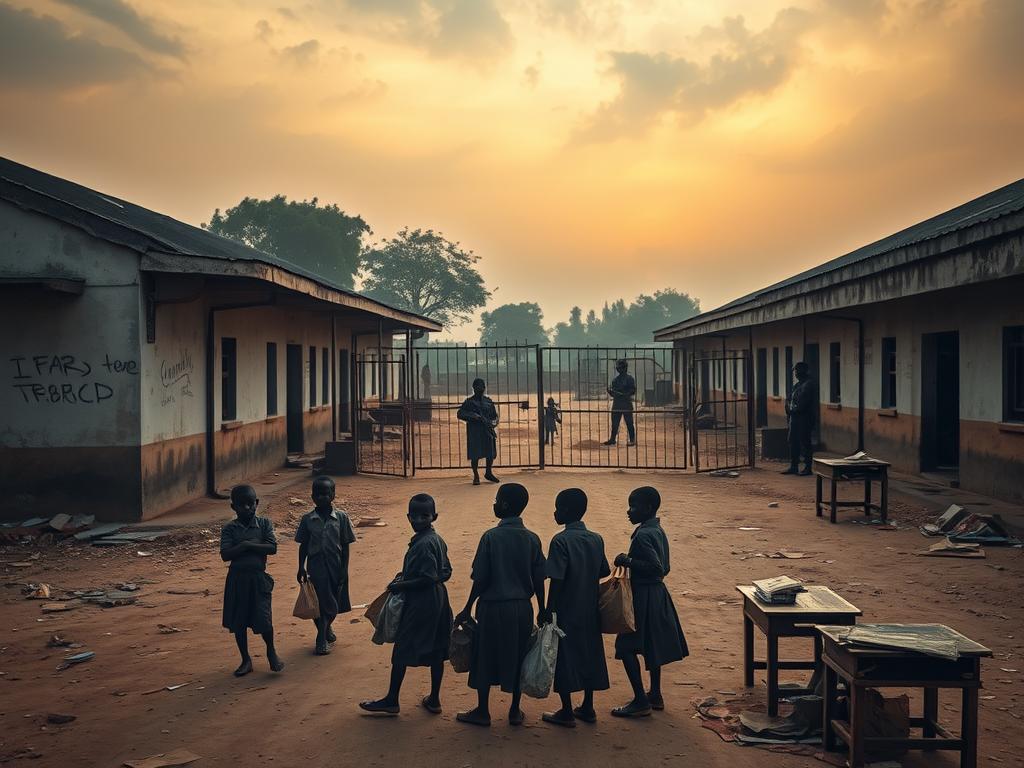
The intricate tapestry of education in northern Nigeria is facing unraveling challenges as the specter of mass abductions haunts its already struggling system. The recent spate of kidnappings, with over 300 students and churchgoers seized in November, has compelled authorities to close educational institutions across the region. This drastic measure, while aimed at safeguarding the young and vulnerable, risks exacerbating the deep-seated educational woes that have long plagued the nation.
Historically, northern Nigeria has grappled with educational deficits, marked by low enrollment rates and inadequate facilities. The recent abductions have added a new layer of complexity, fueling fears and underscoring the region’s security instability. As educational pursuits turn tense with trepidation, the closures reflect not just a response to immediate threats but also a recognition of the broader societal fractures that require urgent attention.
Analyses suggest that these mass abductions are symptomatic of larger socio-economic and political quandaries. The proliferation of criminal networks, coupled with governmental inefficiencies, has emboldened groups intent on exploiting vulnerable populations. This brazen criminality not only undermines educational structures but also destabilizes societal foundations by stalling intellectual and economic growth.
The impact on students extends beyond lost academic time; it disrupts their psychological and social development. With schools shut, the young are deprived of environments conducive to learning and personal growth, pushing them into precarious conditions that could impact their future prospects. Moreover, educators find themselves on the front line, navigating a landscape where safety concerns eclipse pedagogical responsibilities.
While the immediate focus rightly remains on ensuring safety and securing releases, it’s imperative that long-term solutions are crafted to rebuild and fortify the educational landscape. This includes bolstering security measures, enhancing community engagements, and implementing educational reforms that prioritize resilience and adaptability. Only through sustained efforts can northern Nigeria hope to reclaim the promise of education as a beacon of hope and progress for its future generations.