






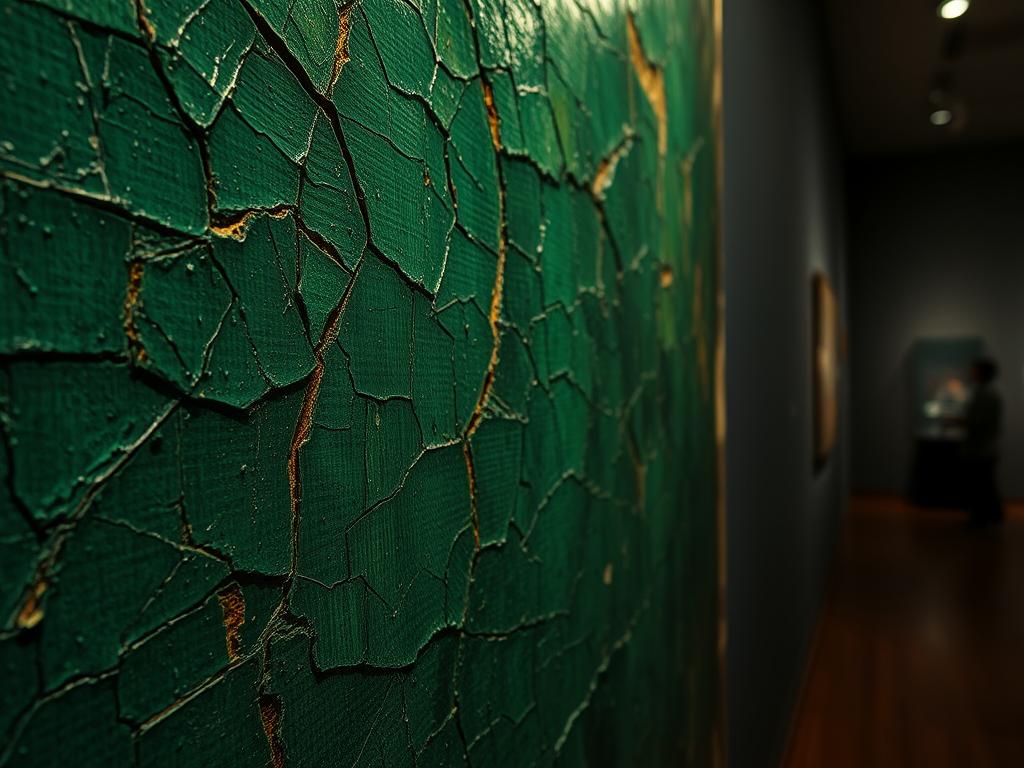
The vibrant hues that grace the canvas of 19th-century paintings like James Ensor’s iconic “The Intrigue” may be losing their brilliance due to an unexpected adversary: light itself. These synthetic emerald-green pigments, once celebrated for their vividness and affordability, are now showing signs of degradation that threaten the longevity of these historic masterpieces. Recent studies have delved into why these once-revolutionary colors are now a source of concern for art conservators and enthusiasts alike.
At the heart of this issue is the chemical makeup of the synthetic emerald-green pigments used extensively during this period. While they were a preferable alternative to more expensive and toxic alternatives like arsenic-laden copper acetoarsenite greens, their synthetic counterparts are proving to be unstable when exposed to extended periods of illumination. This photo-degradation is a complex interaction between the light and the molecular structure of the paint, gradually leading to a breakdown and resulting in the fading of these once-vibrant greens.
Understanding the science behind this degradation is crucial for art preservation efforts. The pigments are subjected to photochemical reactions upon exposure to light, triggering a sequence of changes in their structure that leads to discoloration. Museums face the challenge of exhibiting these works while protecting them from further deterioration, often resorting to dim lighting or rotating exhibits to minimize light exposure. The irony is unmistakable: the very intrinsic qualities that made these paints desirable—affordability and ease of use—are now contributing to their downfall.
It’s not just an issue of aesthetic loss; these changes also alter the historical narratives these artworks convey. As colors fade and alter, the artist’s original vision and emotional impact can be affected, distorting how contemporary audiences experience these works. This degradation poses a broader question about the materials and methods used in art preservation: how can we protect the visual and historical integrity of such artworks for future generations?
In conclusion, as we appreciate the innovative strides made in the 19th century with synthetic pigments, it’s a stark reminder of the delicate relationship between art and its environment. The ongoing challenge for conservators is to balance the dual objectives of accessibility and preservation. As science continues to uncover the mysteries of pigment degradation, we can hope that these efforts will lead to advanced techniques that will help safeguard the dynamic spirit of these cultural treasures.