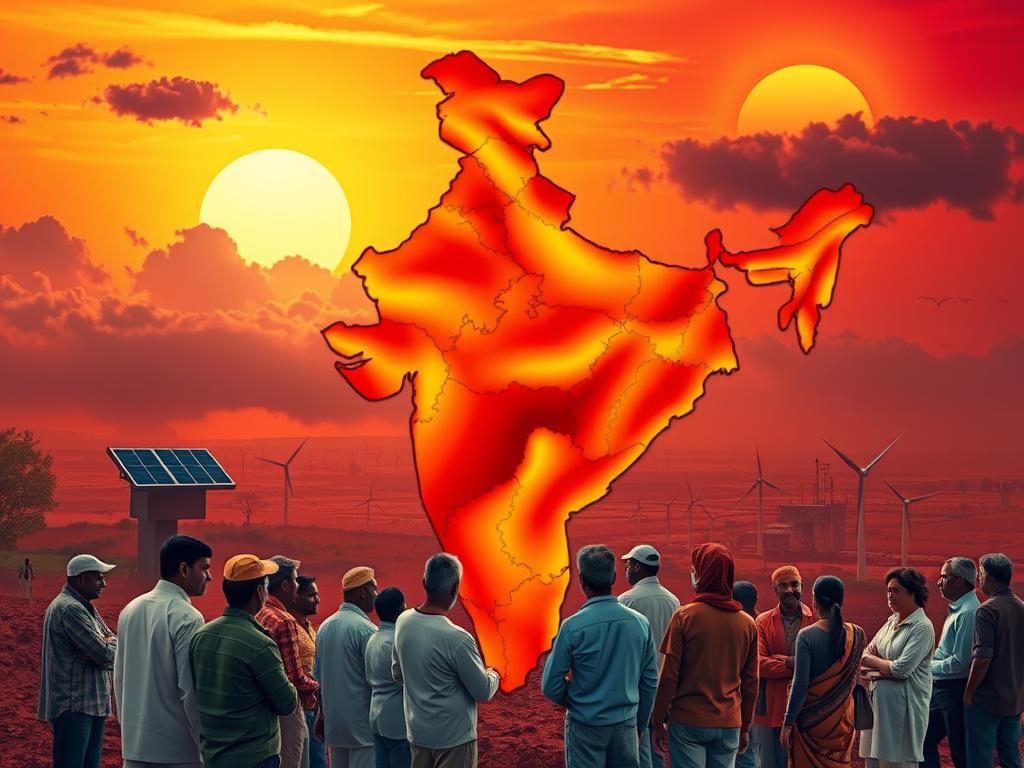
In a striking revelation, a recent study has highlighted that India’s temperature increase is occurring at a swifter pace than was previously anticipated. This peer-reviewed research underscores that the nation has warmed by 0.89°C from the period of 2015 to 2024 relative to the early 20th century. Such findings are essential, as they lay bare not only the immediacy of climatic transformations but also the unpredictability of these shifts.
Examining the temperature trends revealed by international and Indian scientists, it becomes clear that India’s climate challenge isn’t just about rising numbers on a thermometer. The nation’s diverse geography means that the impacts of these changes are unevenly distributed, affecting everything from agriculture to public health. This uneven warming necessitates nuanced strategies to address the varying impacts across the country.
As the planet warms, India has found itself on the precipice of climactic changes fraught with potential risk, including more extreme weather events, such as heatwaves, floods, and droughts. These phenomena are not only more frequent but also more severe, posing risks to vulnerable populations and already strained resources. Adaptation and robust planning are no longer optional but crucial components in mitigating these risks.
In light of these challenges, India must prioritize sustainability and resilience. Local and national policy changes are imperative. There’s a clear need for improved infrastructure, investment in sustainable technologies, and comprehensive policies that support both adaptability and mitigatory efforts. Collaborative approaches—engaging local communities, scientists, and policymakers—can forge pathways to sustainable solutions.
In conclusion, the identified acceleration in India’s climate warming acts as a clarion call for concerted and immediate action. While the challenges are formidable, they also present an opportunity for innovation and leadership in confronting climate change. As India moves forward, the nation’s response could serve as a beacon for others grappling with similar challenges, showcasing how proactive and holistic strategies can turn the tide on climate adversities.