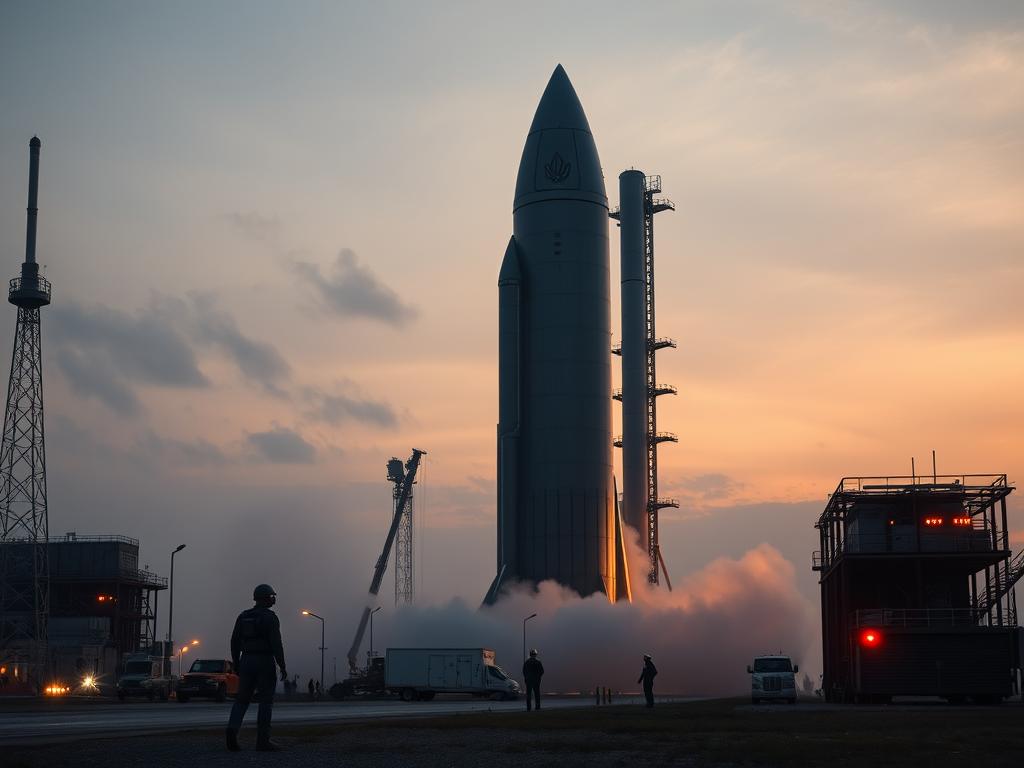
In the ambitious race to revolutionize space travel, occasional setbacks serve as a reminder of the challenges at hand. Recently, the SpaceX Starship program experienced such a moment when its first-stage booster for a revamped iteration faced an unexpected glitch during a vital pre-launch test in Texas. As disappointing as these setbacks can be, they are an intrinsic part of pushing the boundaries of technology and exploring the final frontier.
The pre-dawn mishap involved the colossal booster, which is central to the upgraded model of Starship, SpaceX’s flagship rocket designed for missions to Mars and beyond. While the specifics of the failure remain under wraps by the private aerospace manufacturer, the incident highlights the relentless testing that is critical to the development of robust, reliable spacecraft capable of withstanding the rigors of cosmic travel.
Despite this hitch, SpaceX’s track record demonstrates an ability to learn and grow from such experiences. Each anomaly provides invaluable data and insights that guide engineers and scientists in refining designs and fortifying systems. The iterative process fundamental to SpaceX’s strategy means that even in failure, there is progress—paving the way for future enhancements and increased resilience of the spacefaring vehicles.
Innovation in the realm of rocketry is rarely linear. Each successful launch is preceded by countless trials, many of which falter initially. However, these interruptions do not deter SpaceX nor diminish its vision for interplanetary travel. Instead, every obstacle encountered strengthens the company’s resolve and commitment to reducing the cost of space exploration and making it more accessible.
Ultimately, this testing setback is another chapter in SpaceX’s evolving journey toward making space travel feasible for humanity. The pursuit of such a grand vision requires not just advanced engineering and technology but an attitude that embraces failure as a stepping stone to achievement. As SpaceX continues to refine its capabilities and push forward, the world watches in anticipation of the next breakthrough that edges us closer to a multiplanetary future.