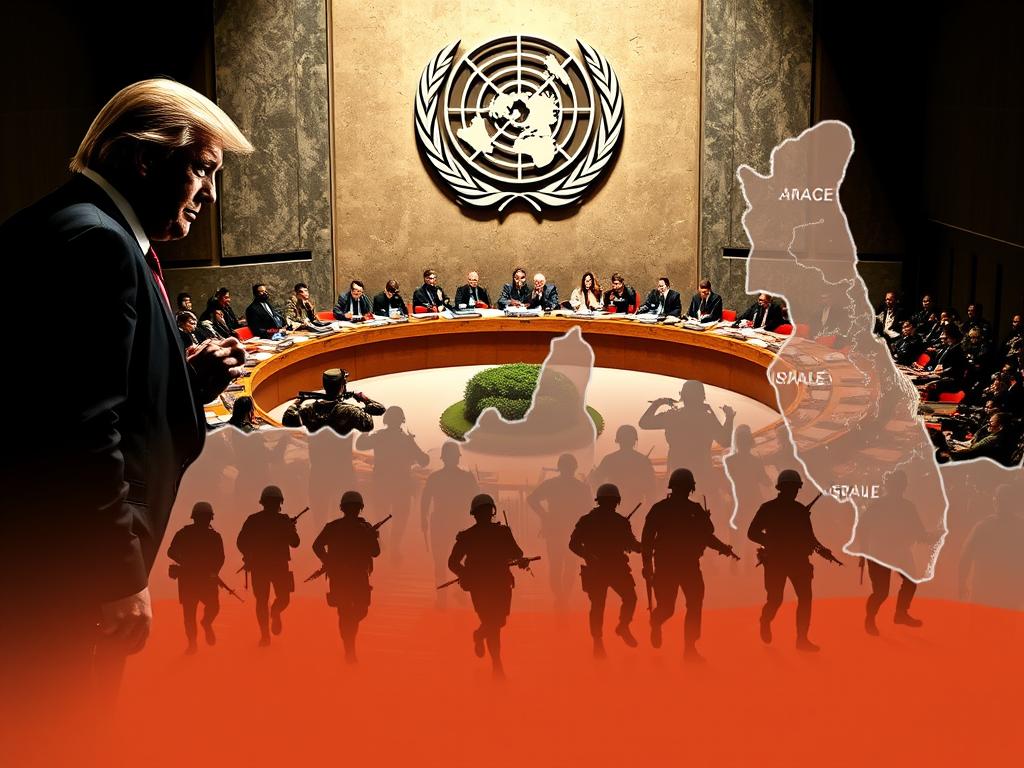
The recent United Nations resolution concerning Gaza has stirred quite the debate, not only because of its implications for the Israeli-Palestinian conflict but also for what it divulges about former U.S. President Donald Trump’s legacy. Central to this resolution is the establishment of an International Stabilization Force, aimed at bringing order to the chaotic region. While the resolution briefly nods to the idea of Palestinian statehood, its primary focus is on stabilization, a goal fraught with complex geopolitical challenges.
The formation of the International Stabilization Force is a monumental endeavor, representing a step towards international coalition efforts in peacekeeping within Gaza. However, significant questions loom over the very fabric of this venture: which countries will contribute troops, and how can a force successfully disarm a deeply entrenched group like Hamas? History shows that disarming such groups is easier said than done, often entailing delicate, strategic negotiations rather than simple military might.
Looking through the lens of Trump’s administration provides context to these recent developments. Trump’s policies in the Middle East, including his administration’s controversial recognition of Jerusalem as Israel’s capital, have arguably added layers of complexity to the peace processes. This resolution might hint at an attempt to reset or counterbalance previous stances, focusing on broader international cooperation and diplomatic stability, elements that were not prioritized during Trump’s tenure.
For Israel and the Palestinians, the resolution offers both opportunities and threats. For Israel, it could mean a possible reduction in violence and a safer border, yet it inevitably raises concerns about sovereignty and foreign troop presence. On the Palestinian front, especially for those in Gaza, there’s a potentially more immediate avenue for peace and rebuilding. Nevertheless, skepticism remains, particularly concerning the enforceability of disarming Hamas, a group that views itself as a legitimate resistance against occupation.
In conclusion, the UN’s recent resolution signals a decisive yet intricate shift in addressing the Israeli-Palestinian conflict. While the International Stabilization Force represents hope for regional stabilization, the execution of such a mission involves navigational challenges that intertwine diplomacy, military strategy, and international collaboration. Only time will tell if this resolution will steer the region toward peace or simply serve as another chapter in its ongoing saga of uncertainty and unrest.