





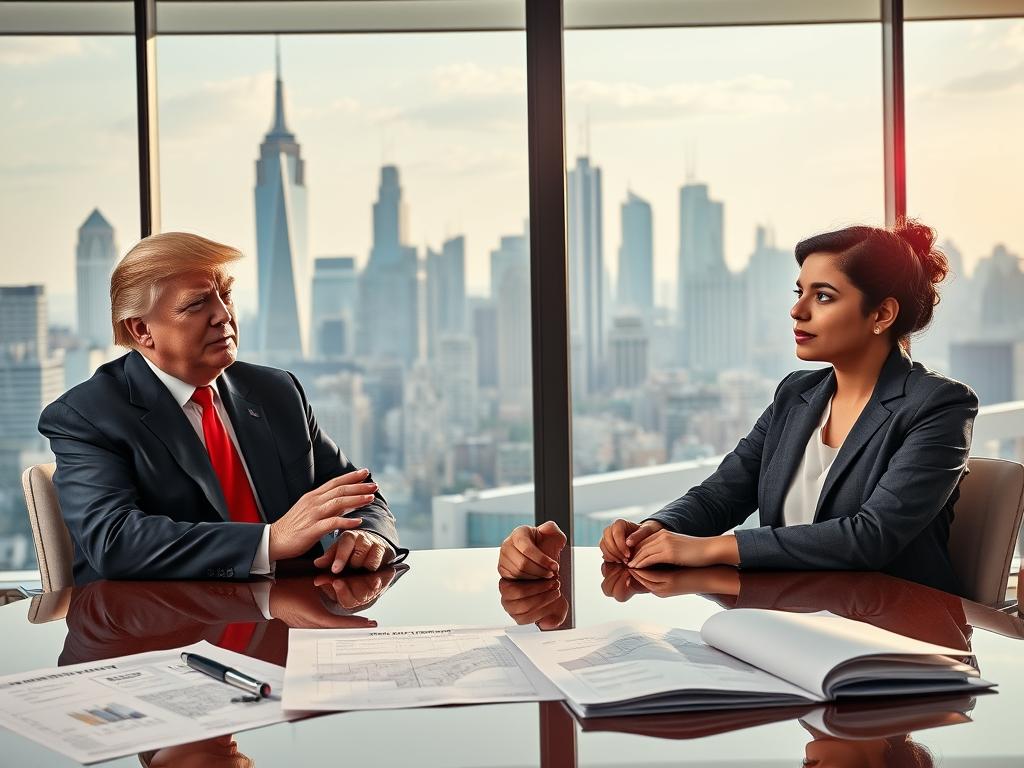
In a surprising turn of events, former President Donald Trump has announced his intention to meet with New York City’s mayor-elect, Zohran Mamdani. Despite months of heated criticism, Trump now suggests he might find common ground with the democratic socialist leader. Initially, Trump was vocally opposed to Mamdani, often branding him with harsh labels and predicting dire consequences for the city under his leadership. This change in tone suggests a potential shift towards dialogue over discord.
The dynamic between Trump and Mamdani has been tumultuous, marked by rhetorical battles that painted Mamdani as an ideologue whose vision was allegedly incompatible with New York’s prosperity. Trump’s forecasting of chaos under Mamdani’s win seemed primarily rooted in political disagreement. However, the intention to meet indicates Trump’s recognition of the practical necessity to engage with emerging political realities, indicating a possible thaw in relations.
Observers are intrigued by what seems to be a strategic pivot from confrontation to collaboration. This meeting could signal Trump’s desire to stay relevant in the political arena by aligning himself with current leaders and influencers, even those with differing ideologies. For Mamdani, engaging with a figure like Trump offers a chance to demonstrate an inclusive approach to leadership—one that aims to bridge political divides for the city’s benefit.
The stakes for New York City are significant. Both leaders understand the socioeconomic complexities facing the metropolis, from housing and healthcare to climate resilience and economic recovery post-pandemic. It is plausible that Trump and Mamdani might find mutual interest in specific areas, such as infrastructure development or business revitalization strategies, where common objectives could outweigh their differences.
Ultimately, this upcoming meeting, still in the planning stages, hints at the potential for unprecedented cooperation. If successful, it could set an example of how ideological adversaries can transform opposition into opportunity. As an observer of political discourse, one can only hope that this dialogue marks the beginning of collaborative problem-solving, fostering a spirit of unity in navigating the challenges New York City—and indeed the world—faces today.