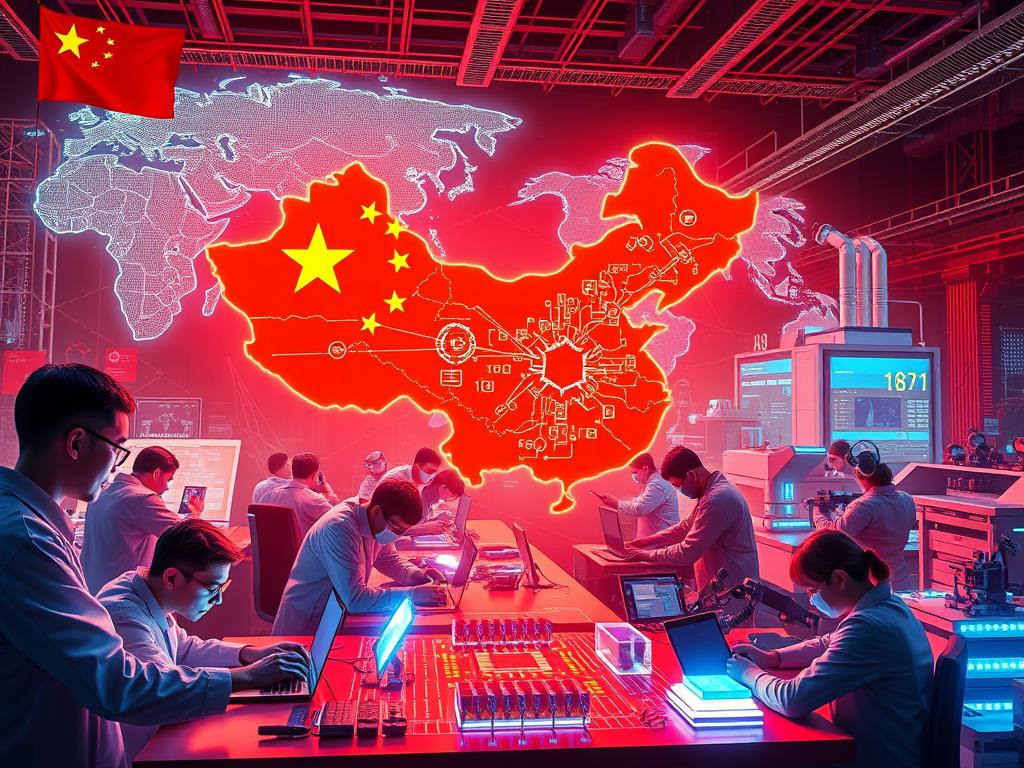
In an unexpected twist, U.S. export controls intended to maintain technological superiority have inadvertently catalyzed a new wave of innovation across the globe. The restriction on Nvidia chips, deemed crucial for advanced AI development, was intended to hobble China’s progress. However, far from stunting growth, this move has propelled China into uncharted territories of self-reliance and innovation in artificial intelligence.
Faced with the challenges of chip shortages, Chinese tech firms have pivoted rapidly, investing in domestic research and development with renewed vigor. This adaptation might have initially seemed a daunting task, but China’s burgeoning tech infrastructure and robust government support have fostered an environment ripe for pioneering breakthroughs. In fact, local companies are now accelerating efforts to develop indigenous AI solutions that can compete on a global scale, demonstrating remarkable resilience in the face of adversity.
While some critics argue that the export controls are necessary to protect national interests, it’s becoming evident that technological isolation is not sustainable in an interconnected world. China’s response to these restrictions underscores the critical importance of collaborative growth over competitive hindrances. Instead of restricting access to key technologies, a more fruitful approach might be to foster international partnerships, encouraging a free exchange of ideas and innovations that benefit all parties involved.
The narrative of technological advancement now hinges on creating a more inclusive global ecosystem where competitiveness and cooperation can coexist. The challenges once perceived as barriers have become stepping stones in China’s quest to become a self-sufficient powerhouse in the AI domain. As local talent and resources are directed towards homegrown chip technologies, the world is witnessing the emergence of a formidable contender in the AI landscape.
In conclusion, the global AI race is arguably more about innovation and collaboration than mere competition. The U.S. chip export controls, while intended to maintain an upper hand, have inadvertently catalyzed a burgeoning field of independent development in China. With every challenge lies an opportunity, and China’s journey towards technological autonomy illustrates the power of resilience and the potential for groundbreaking advancements outside traditional realms of influence. The future of AI might just rely on how well we can all learn to share the sandbox.