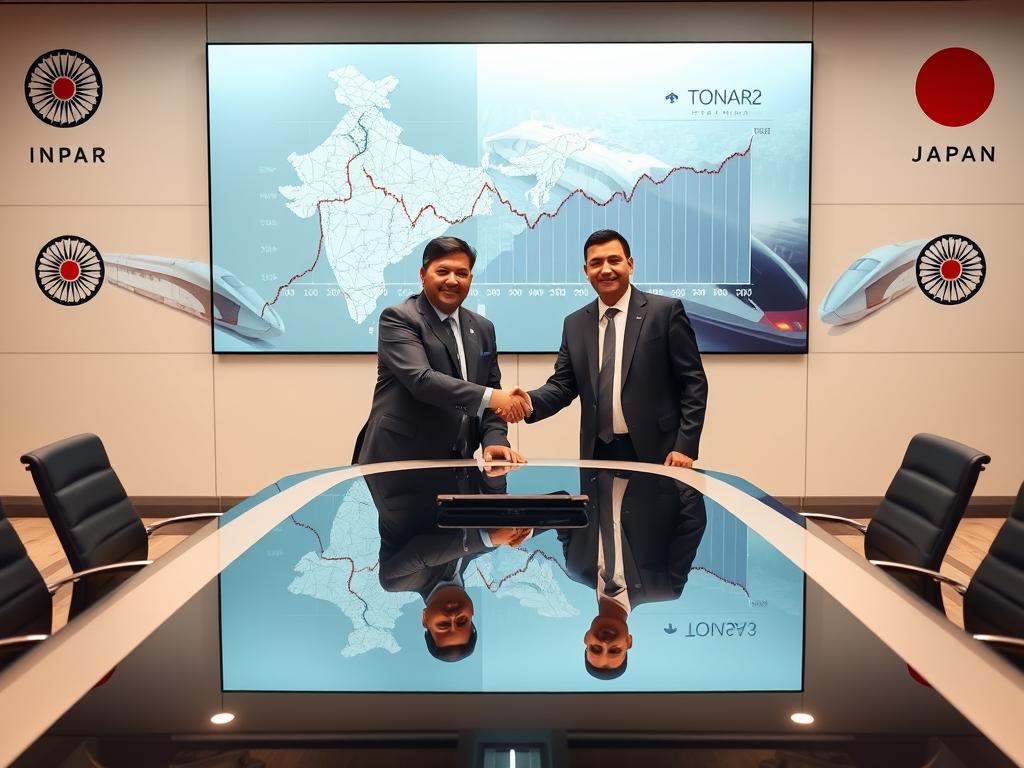
The Indian Railway Finance Corporation (IRFC) has recently made a significant financial move by securing a $300 million external commercial borrowing (ECB) from Japan’s Sumitomo Mitsui Banking Corporation. After a three-year hiatus from international lending markets, this marks a noteworthy return for IRFC, as the funds are slated to fuel key railway infrastructure projects. Given the reliance of India’s transport system on its vast railway network, these developments underscore the critical role of international partnerships in bolstering national infrastructure.
What makes this borrowing notable is the linkage to TONAR, or the Tokyo Overnight Average Rate, which reflects a strategic alignment with Japan’s financial instruments, a move that opens doors for further international collaborations. The five-year tenure of this loan allows for substantial time to direct these funds effectively towards enhancing India’s rail systems, including modernization and expansion projects that are long overdue.
IRFC, being a state-owned entity, plays a crucial part in orchestrating financial resources for the Indian Railways, the backbone of the country’s long-distance and commuter travel. By securing this funding, IRFC can alleviate some of the financial constraints that have impacted the national carrier’s ability to expand its reach and services. This push towards borrowing from foreign sources aligns with broader governmental strategies to fortify India’s infrastructure through diversified funding methods.
From a broader perspective, the choice of a Japanese partner is intriguing. As one of the world’s leading economies with a robust technological and engineering sector, Japan has consistently been a supporter of India’s infrastructure aspirations. This deal not only strengthens economic ties between the two nations but also positions India to potentially benefit from Japan’s expertise in railway technology, which could spur additional collaborations in terms of both finance and innovation.
In conclusion, IRFC’s re-entry into the external commercial borrowing scene through this partnership with Sumitomo Mitsui not only emphasizes the growing dynamism of India’s railway sector but also highlights the importance of global partnerships in achieving national development goals. As this project unfolds, it will be essential to observe how effectively this injection of funds translates into tangible improvements in the rail-linked infrastructure, serving as a testament to the power of international collaboration in realizing a nation’s infrastructural vision.