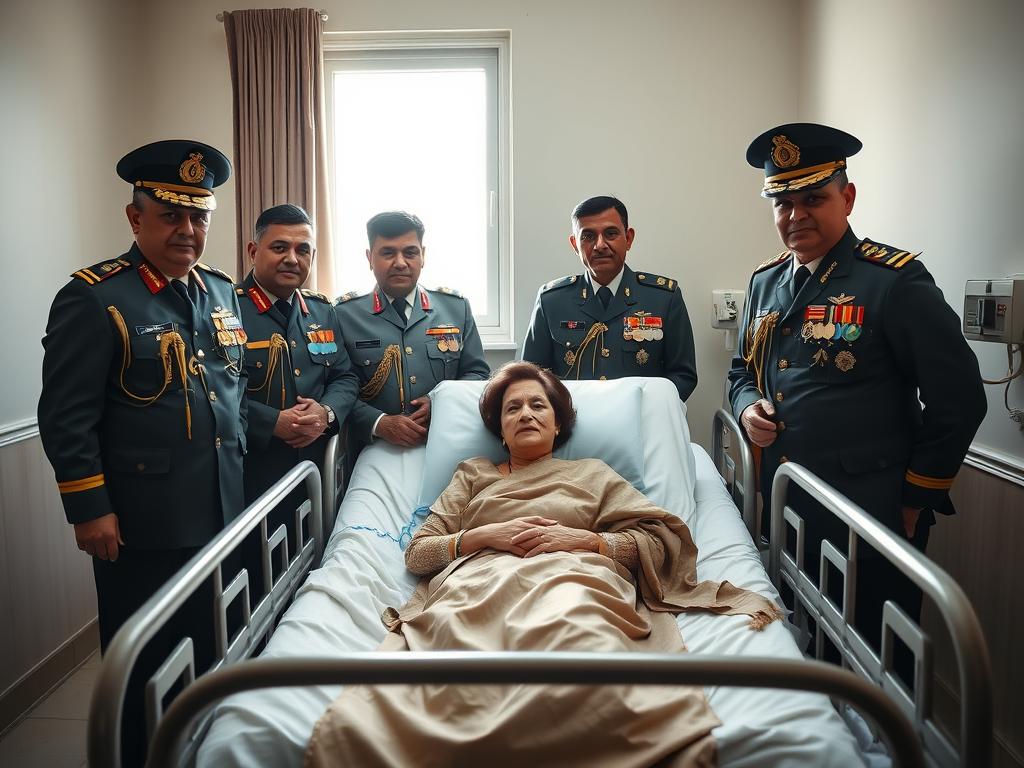
In an unprecedented demonstration of respect and solidarity, the chiefs of Bangladesh’s army, navy, and air force made a rare joint visit to the hospital where former Prime Minister Khaleda Zia is currently undergoing treatment. This visit is significant not just in its occurrence but in what it signals in terms of political and military relations in Bangladesh, a nation that has often witnessed turbulent intersections between its political leadership and military establishment.
The sight of the three military chiefs gathering to visit an ailing political figure such as Khaleda Zia is an image laden with meaning. Zia, who led Bangladesh as its prime minister twice, has been a pivotal figure in the nation’s political landscape. Her health and legal challenges in recent years had somewhat dimmed her once prominent public presence. Thus, the military leaders’ visit could be interpreted as a gesture extending beyond personal welfare and moving into the territory of acknowledging Zia’s enduring impact and legacy in the political sphere.
One might wonder what motivates such a public display of unity and empathy from the military towards a political leader, especially in a country where the boundaries between military influence and political administration have been historically complex. This visit could be signaling a broader attempt to bridge any divides that have historically existed between civilian and military entities within Bangladesh. Such actions can fortify the nation’s stability by demonstrating a commitment to mutual respect and cooperation—values that are crucial for sustainable governance.
Beyond the political implications, this rare public appearance can also be viewed through a humanitarian lens. It showcases a human side to the military leadership; a reminder that, despite differing roles and responsibilities, compassion transcends hierarchical boundaries. This act of visiting a former leader at such a vulnerable time reflects a shared understanding of the human condition, and a recognition that illness often becomes a unifying force that strips away barriers, leaving only empathy and respect.
In conclusion, the joint visit by the military chiefs to Khaleda Zia represents a meaningful moment in Bangladesh’s narrative. It not only conveys a message of respect and recognition to a former national leader but also potentially paves the way for enhanced civil-military relations. In a country where political dynamics are continually evolving, such gestures can lay down a foundation for future cooperation and mutual understanding. As Bangladesh continues to navigate its path forward, these acts of solidarity might just be what is needed to propel the nation towards a more unified and cohesive future.