






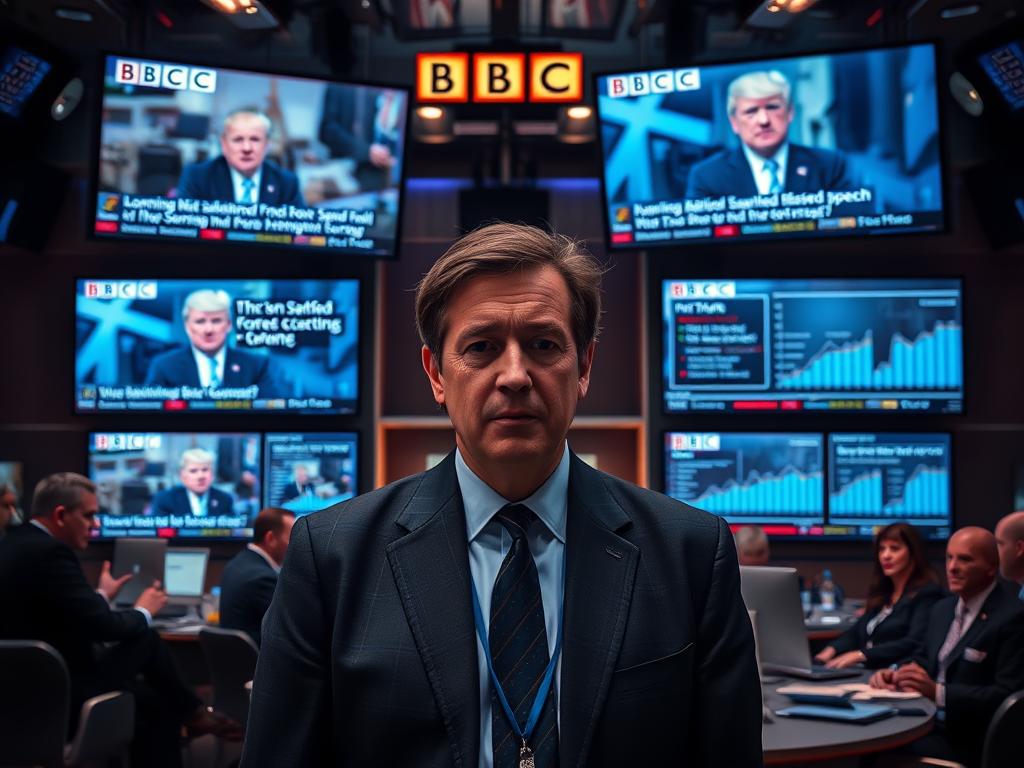
The British Broadcasting Corporation (BBC) finds itself in turbulent waters as Prime Minister Keir Starmer calls for the institution to address alleged editorial missteps. This admonition follows US President Donald Trump’s announcement of a possible $1 billion lawsuit against the broadcaster, accusing it of skewing his speech. As tensions mount, this development serves as a crucial moment for both media institutions and political leaders who rely heavily on the integrity of information dissemination.
In an era when media outlets navigate the delicate balance between diligence and speed, controversies such as these highlight the essential nature of precision in reporting. The BBC, a cornerstone of global journalism, now faces scrutiny under Starmer’s urging to restore its credibility by correcting any potential errors. As viewers and consumers of news, we must consider how trust in media is built or eroded through accuracy and accountability.
While President Trump’s threats of legal action may fuel further discourse on media reliability, they also amplify the broader debate concerning freedom of the press and its limitations. Legal or not, the implications of such a lawsuit could significantly impact journalistic practice, urging networks worldwide to revisit editorial policies and underscore the importance of fact-checking. Beyond legal and monetary concerns, the core issue remains the public’s right to unvarnished truth.
Keir Starmer’s intervention underscores the intertwined realms of politics and media, where a symbiotic relationship exists. Politicians depend on media to amplify their messages, while media outlets require political narratives to inform public debate. However, when this relationship turns adversarial, it often exposes the vulnerabilities and responsibilities inherent within it. The BBC’s handling of this situation may set a precedent for news agencies globally as they adapt to the demand for transparency and accuracy amidst the confluence of political pressures.
Ultimately, this scenario presents an opportunity for reflection and reform within the media landscape. In our collective pursuit of truth, it’s imperative that news organizations like the BBC maintain rigorous editorial standards that withstand public scrutiny and political critique. As we anticipate how this story unfolds, the hope remains that such scrutiny will lead not only to improved practices but also to a renewed commitment to journalistic integrity for the sake of informed and empowered audiences everywhere.