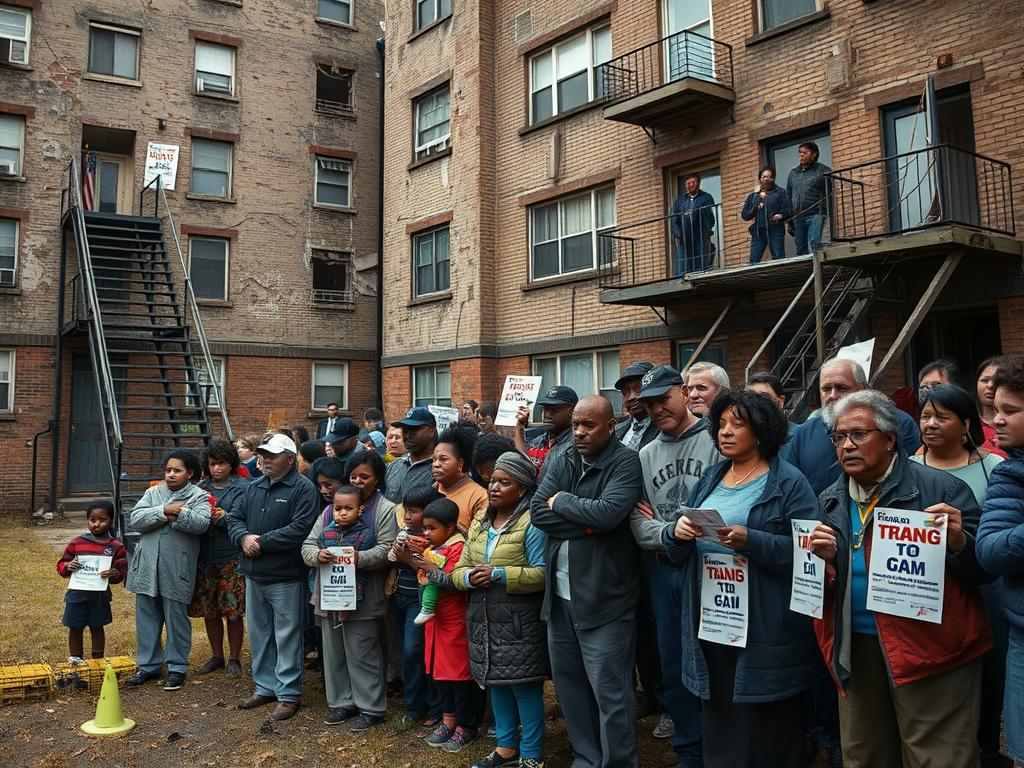
The residents of Harrison Courts Apartments in Chicago are raising their voices, not for a luxury makeover, but for basic living standards—a warm, safe, and rodent-free home. These tenants of Chicago Housing Authority (CHA) properties are tired of making incessant requests for essential repairs. Their concerns stem from living conditions that no one should endure, yet have unfortunately become the norm rather than the exception.
For years, these residents have faced peeling paint, broken fixtures, and a persistent rodent infestation. Though their appeals for repairs echo through numerous channels, they are often met with silence or perfunctory promises from the authorities. The delay in addressing these issues is more than just an inconvenience; it’s a question of human dignity and health. Living in such an environment can have lasting impacts on physical and mental well-being, prompting the community to finally say ‘enough is enough.’
City officials and CHA’s responses, or lack thereof, highlight a recurring theme in urban public housing management—resource constraints and bureaucratic sluggishness. The stories emerging from Harrison Courts urge a broader reflection on the mechanisms in place for maintaining public housing and the prioritization of the funding needed to make necessary repairs. Accountability, it seems, is as important as availability when it comes to ensuring safe living conditions.
It’s vital for policy-makers to walk the halls of the very buildings affected by these complaints, to truly understand the gravity of the situation. Funding public housing isn’t merely about providing shelter; it’s about ensuring residents live with dignity and security. CHA and city officials have a responsibility to the tenants, who not only require immediate solutions but also long-term commitments to maintenance and upgrading efforts to prevent such situations from recurring.
The voices from Harrison Courts challenge us to redefine how we perceive and manage public housing. Bringing sustainable improvements to these apartment complexes calls for community collaboration, innovative thinking, and willing partnerships between government entities and residents. It’s not just about fixing what’s visibly broken, but about nurturing an environment where everyone can flourish. As residents band together to demand better, their resilience and determination should serve as a wake-up call for meaningful change in public housing strategies.