






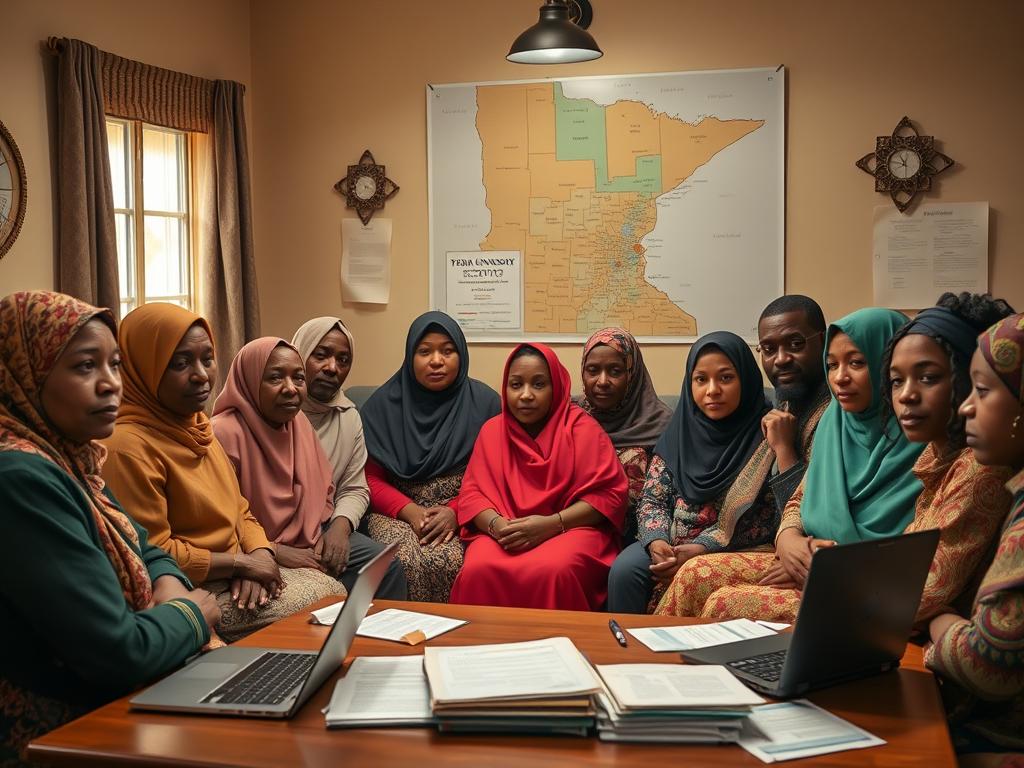
Recently, the political discourse in the United States has been stirred by former President Donald Trump’s social media posts hinting at the termination of Temporary Protected Status (TPS) for Somalis in Minnesota. While these statements have sparked concern and confusion, it’s crucial to recognize the limitations of presidential power in this context. The TPS program, which offers temporary relief to individuals from countries experiencing ongoing armed conflict or environmental disasters, cannot be whimsically dismantled by a single executive decision.
TPS is a lifeline for many Somalis residing in Minnesota, a state known for its vibrant Somali community and cultural diversity. The status allows individuals to live and work legally in the U.S., providing much-needed stability. Trump’s rhetoric overlooks the procedural intricacies involved in altering the TPS designation, which includes bureaucratic checks and balances involving multiple governmental agencies and adherence to legal standards.
Any changes to TPS must undergo a rigorous review process. This involves significant input from the Department of Homeland Security and consultation with other administrative bodies. Such decisions must be grounded in evidence and policy analysis, reflecting the conditions of the origin country. Somalia, recovering from years of conflict, remains in a state where the immediate return of its nationals could further destabilize the region and put lives at risk.
The Somali community in Minnesota is a testament to resilience and adaptation, contributing economically and culturally to the state. The possibility of TPS termination raises critical human rights concerns and threatens to disrupt lives built over decades. There’s also the broader question of how immigration policies reflect America’s values of compassion and support for vulnerable populations.
Ultimately, the discourse around TPS for Somali nationals underscores a broader debate on immigration policy and executive power limits. While social media posts can draw attention and incite reaction, they should not overshadow the intricate legal processes and diverse voices needing consideration in policy decisions. As we look towards the future, it’s imperative for policymakers and the public to engage in informed and empathetic dialogue, focusing on creating sustainable and humane immigration solutions.