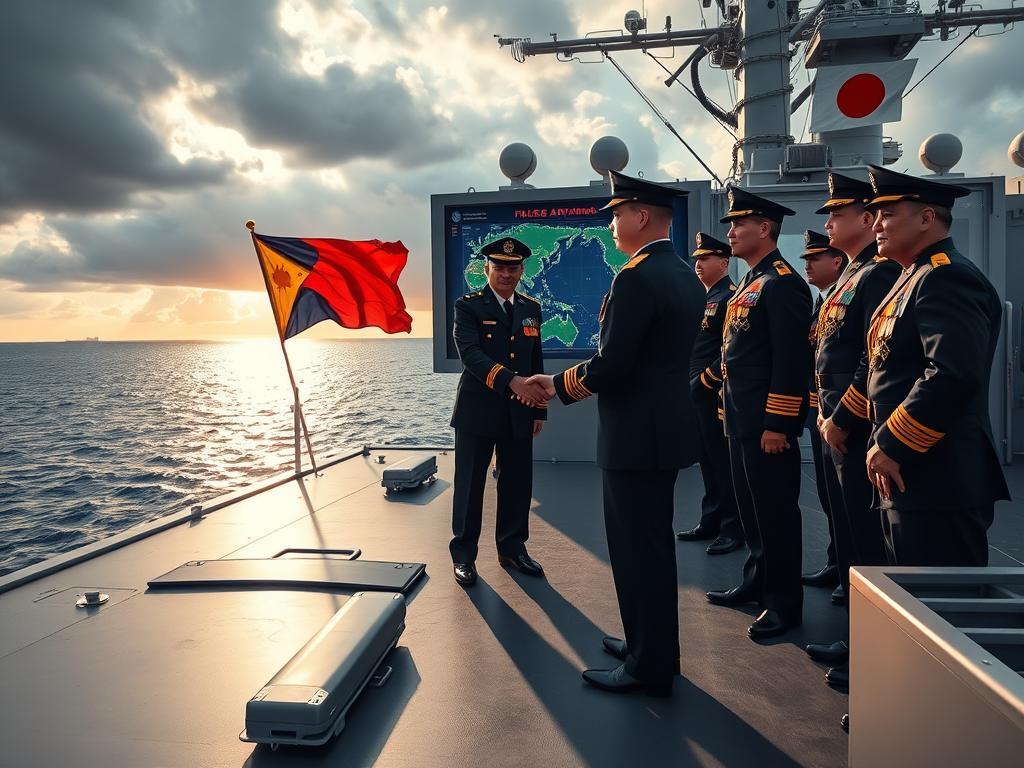
In a move signaling a significant pivot in regional defense dynamics, the Philippine Fleet is deepening its naval collaboration with Japan amidst escalating tensions in the Indo-Pacific. This strategic realignment aims to counterbalance the growing assertiveness of China, especially in the contested waters of the West Philippine Sea. Rear Admiral Joe Anthony Orbe’s recent visit to Japan marks a pivotal step in this direction, underscoring a burgeoning partnership between Manila and Tokyo that extends beyond shared waters into a realm of shared security concerns.
During his visit, Rear Admiral Orbe met with Vice Adm. Katsushi Omachi, commander of the Japan Self-Defense Fleet, where they both recognized the increasing frequency of joint naval operations. These activities range from crucial maritime patrols to essential humanitarian assistance and disaster relief drills. The recent implementation of the Philippines–Japan Reciprocal Access Agreement (RAA) is a testament to this growing alliance, paving the way for smoother interoperability through coordinated exercises and shared logistics. This agreement reflects a broader policy shift as both nations adapt to the changing security landscape in the Indo-Pacific.
One of the highlights of Orbe’s visit was the tour of JS Kumano, Japan’s cutting-edge frigate. This not only symbolizes Japan’s expanding defense capabilities but also its readiness to assume a more proactive role in securing regional stability. Amidst increasing Chinese maritime encroachments, Japan’s enhanced naval presence serves as a reassurance to its regional partners, advocating for a collective stance in preserving the freedom of navigation and the stability of critical sea lanes.
In a subsequent meeting with Adm. Akira Saito, Chief of Staff of the Japan Maritime Self-Defense Force, Orbe reinforced Manila’s commitment to fostering deeper security ties with Japan. Adm. Saito welcomed this initiative, emphasizing the strategic necessity of collaborative defense efforts to safeguard a free and open Indo-Pacific. These discussions highlight Manila’s strategic recalibration towards aligning itself with reliable partners who share similar security imperatives and geopolitical outlooks.
In conclusion, the renewed vigor in Philippine-Japanese naval cooperation signals a broader trend in regional security strategy. As geopolitical tensions heighten, especially with aggressive maneuvers in the West Philippine Sea, such alliances become increasingly vital. By expanding and strengthening these maritime partnerships, both nations aim to create a regional environment where peace and security are upheld through cooperation, against the backdrop of a rapidly shifting power balance in the Indo-Pacific.