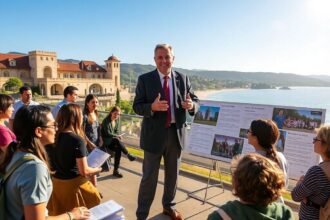







In a move that broadens educational horizons, Mohave College has achieved a significant milestone by gaining accreditation to offer bachelor’s degree programs. This initiative is not just a leap forward for the college but also a transformative opportunity for the local community and aspiring students. With the inaugural enrollment set for spring 2026, Mohave College is poised to become a pivotal player in the landscape of higher education in the region.
The introduction of bachelor’s degrees marks a momentous expansion of Mohave’s academic offerings, aligning the college with current educational trends and workforce demands. Historically, the institution has been known for its certificate and two-year associate degree programs. However, this new venture into four-year degrees reflects its commitment to adapting to the evolving needs of students seeking more comprehensive educational pathways without having to relocate to distant universities.
From my perspective, Mohave’s new status as a bachelor’s degree-granting institution could be a game-changer for regional socioeconomic dynamics. By providing access to higher education locally, Mohave College reduces the necessity for students to leave their communities in pursuit of broader academic endeavors. This not only keeps talent within the area but also encourages economic growth and diversification as graduates enter the local workforce with newly acquired expertise and skills.
The college’s decision to expand into four-year degree offerings comes at a critical time when the demand for bachelor’s degrees continues to rise. A growing body of research shows that individuals with a bachelor’s degree tend to have better employment prospects and higher earning potential. As such, Mohave College’s new accreditation could significantly impact student outcomes by enhancing their career trajectories and elevating their professional development.
In conclusion, Mohave College’s leap into offering bachelor’s degrees marks a meaningful step toward educational inclusion and accessibility in the region. This progression is not just about adding more classes; it is about enriching the educational fabric of the community and inspiring both current and future generations of learners. As spring 2026 approaches, new doors will open for students eager to embark on these expanded academic journeys right in their hometown.