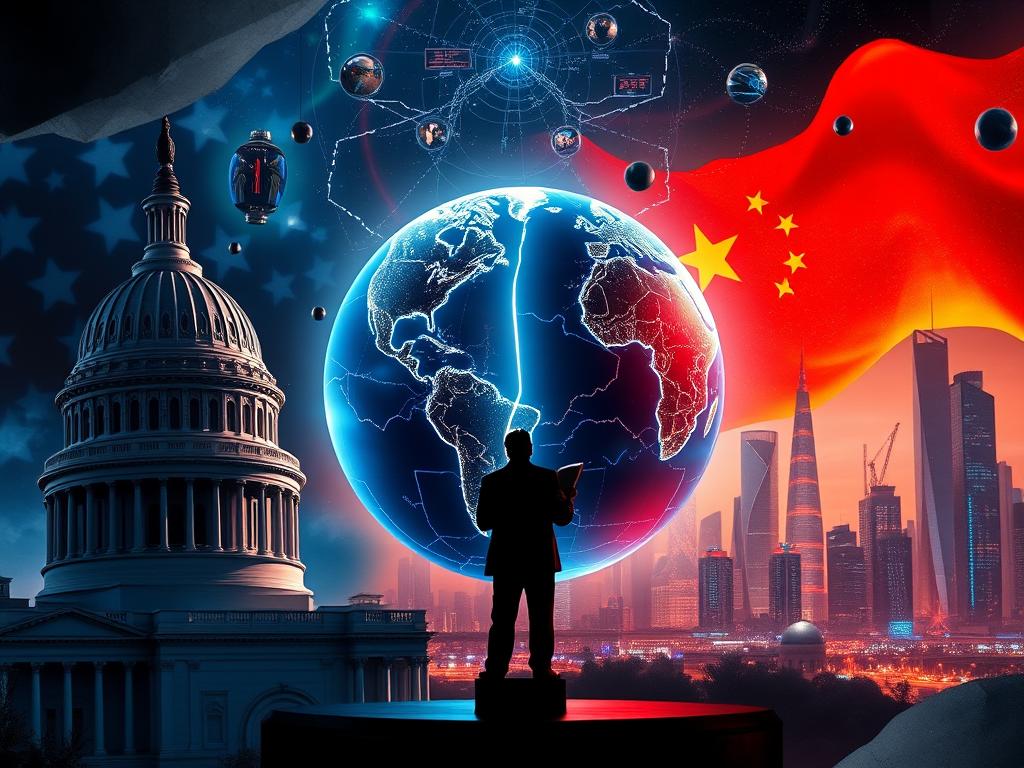
The annals of history remind us that rising powers inevitably challenge existing hegemonies, a premise the Greek historian Thucydides identified and which remains relevant today. As America grapples with internal discord and political polarization, the specter of the ‘Thucydides Trap’ looms large. This term describes the structural stress when a rising power threatens to displace a current one, metaphorically encapsulating the current U.S.-China dynamics. While the Federal Government’s longest shutdown seems like a local affair, this internal strife reflects broader geopolitical uncertainties with far-reaching consequences.
Washington’s political gridlock underscores a deeper fear shared across party lines: the erosion of the post-World War II international order that the United States helped establish. This world order is being contested not just by military might, but through economic influence, technological competition, and cultural exchange. In an era where data reigns supreme, the United States finds itself in a delicate dance with China, whose rapid advancements in technology and infrastructure pose both opportunities and challenges to American preeminence.
As both nations vie for influence, the risk lies in misunderstanding and miscalculation. The complex interdependence of global markets means that a shift in one power dynamic reverberates across the globe. The recent government shutdown may seem unrelated at first glance, but it is symptomatic of a governance system fraught with division—an Achilles’ heel when navigating crucial foreign policy decisions. The effectiveness of any leadership, particularly on the global stage, hinges on unity and a coherent strategy, traits currently elusive in U.S. politics.
Nonetheless, there is potential for a different kind of narrative. The United States has historically thrived on adaptability and innovation. While geopolitical challenges are undeniable, they also present a chance for America to redefine what leadership looks like in the 21st century. By emphasizing multilateralism, investing in sustainable technologies, and reforming political institutions to reflect a commitment to justice and equity, America has the opportunity to strengthen, rather than diminish, its global standing.
In conclusion, the confrontation between established and emerging powers is an age-old phenomenon, yet today’s context is unprecedented in its complexity and scope. The ‘Thucydides Trap’ is not an inevitability but a challenge that calls for strategic foresight and collaboration. As America stands at this crucial juncture, the task ahead is not merely about preserving a way of life but charting a course that exemplifies the best of human ambition and foresight, ensuring a peaceful and prosperous global future.