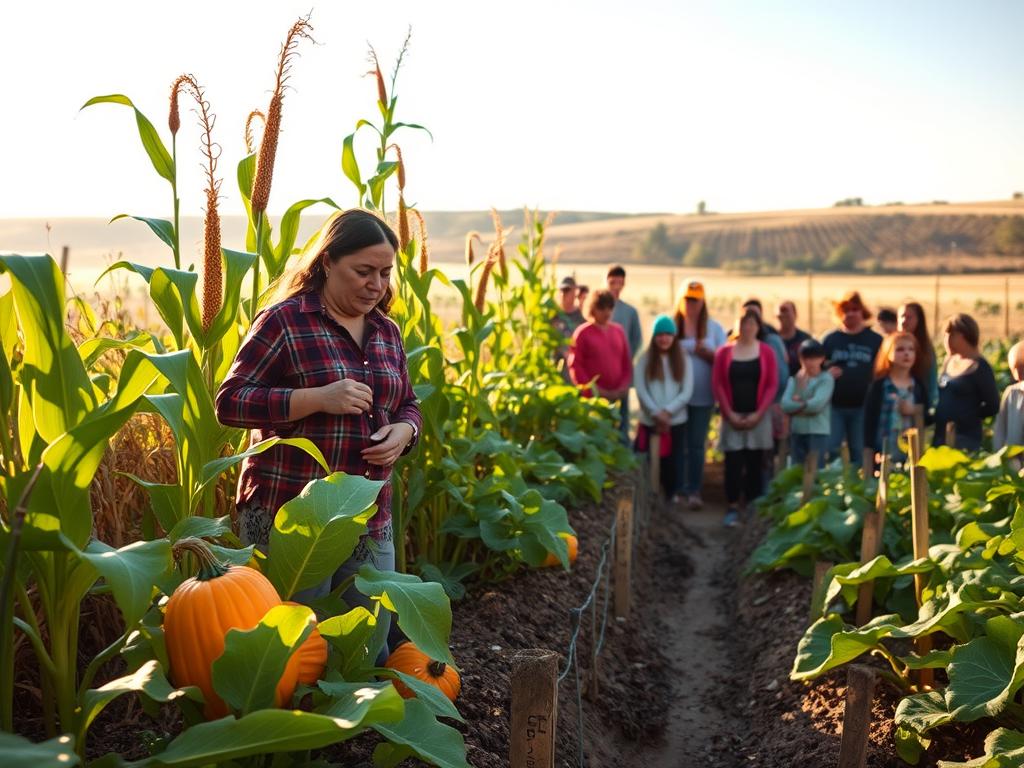
On a crisp autumn morning in New Town, North Dakota, Ruth De La Cruz searched among the leaves of the Four Sisters Garden for a treasure not just of sustenance but of heritage — the Hidatsa squash. For participants in her food sovereignty program, these vibrant crops represent a college assignment with deeper roots. They are a tangible link to Indigenous knowledge, echoing the wisdom of their ancestors in agricultural practices.
The Four Sisters Garden isn’t merely a plot of land; it’s a living classroom where history and botany intertwine. The garden cultivates more than just plants; it nurtures an understanding of Indigenous food systems that sustained communities for generations. Ruth’s efforts help students appreciate a rich cultural past, all the while advocating for a sustainable future. By prioritizing Indigenous crops like the Hidatsa squash, they’re rediscovering and preserving agricultural techniques integral to their identity.
This resurgence of traditional agriculture highlights the essential role of Indigenous knowledge in modern sustainability challenges. These ancient practices offer insights into resilience and balance, principles vital in today’s quest to combat climate change. By conserving these methods, Indigenous communities also champion biodiversity, a critical element often overlooked in contemporary agriculture dominated by monocultures.
Ruth’s mission transcends academia. It’s a movement toward reclaiming autonomy over food systems. This empowerment through Indigenous agriculture offers meaningful pathways for communities to secure economic independence, improve health outcomes, and foster cultural pride. As students engage with this age-old wisdom, they are not just earning credits; they are cultivating a sense of responsibility toward their heritage and environment.
The work underway in North Dakota serves as a reminder and an inspiration: The restoration of Indigenous agricultural practices is not solely an act of looking back, but rather a forward-thinking strategy for nurturing community resilience and environmental harmony. Through initiatives like those at the Four Sisters Garden, there’s a hope that these vital traditions will continue to flourish, carrying their legacy into the future with renewed vigor and relevance.