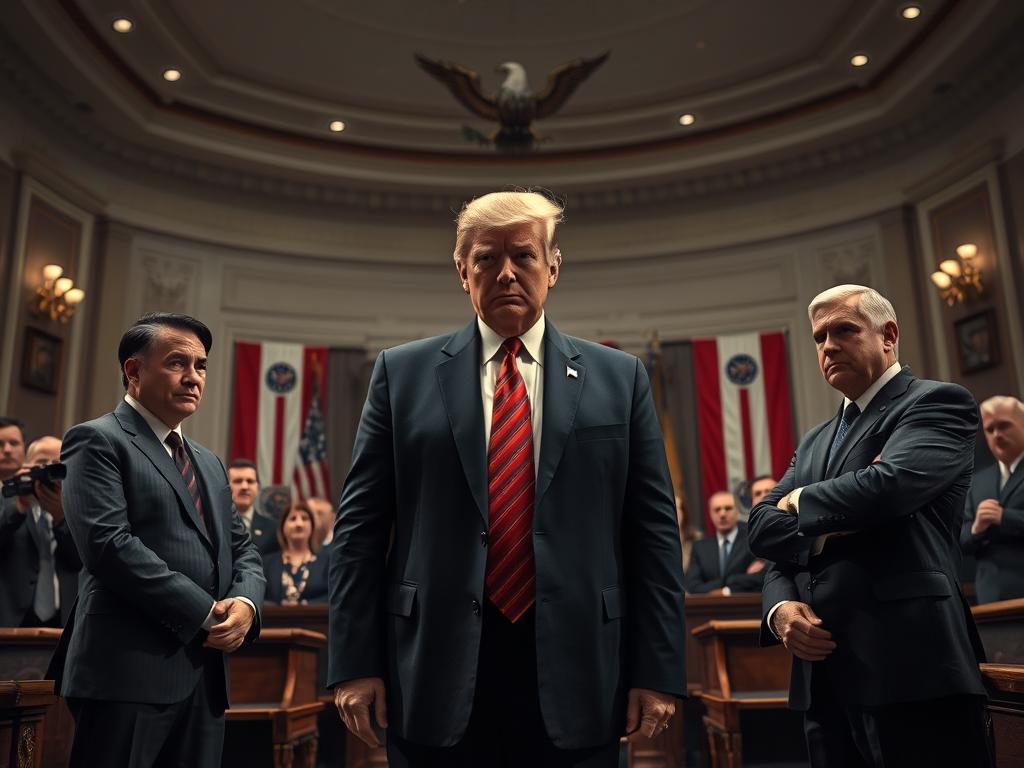
The political landscape is rife with tension as cracks begin to appear within the Make America Great Again (MAGA) movement, initiated by former President Donald Trump. This weekend, Trump experienced an unexpected setback after engaging in a conflict with two Congressional Republicans and seemingly coming up short. The event has sparked discussions about the changing dynamics within the Republican Party, raising questions about the once unshakeable influence Trump held over it.
Historically, Trump’s assertive leadership style has been characterized by his ability to galvanize unwavering support from a significant faction of the GOP. However, recent developments suggest that this formidable control might be waning. The incident where Trump failed to sway these Republicans serves as an indicator of shifting allegiances and perhaps a burgeoning desire for a change in leadership style among conservative lawmakers.
Some political analysts argue that these emerging divisions within the GOP could be a sign that the party is navigating towards a new direction. While Trump’s provocative communication tactics and bold policy stances once solidified his standing, there is a sense that some party members might be yearning for a more traditional, perhaps less polarizing, approach. In this context, the confrontation with the Republicans could be more than just a disagreement, but rather a manifestation of a deeper need for political evolution within the party.
On a broader spectrum, the internal friction within the GOP could have far-reaching implications for the upcoming elections. If Trump’s influence continues to dwindle, this might empower other Republican figures seeking to establish their own leadership narratives. Furthermore, the broader electorate might view these dynamics as an indication of a potentially transformative phase for the party, potentially affecting voter sentiments and strategies in both Federal and State elections.
Ultimately, while it is too early to declare a definitive shift in the GOP’s identity, this incident exemplifies the complexities of political influence and leadership within the party. It highlights how adaptability to the evolving political climate is crucial for maintaining relevance and power. As the political spectrum continues to evolve, the GOP’s path forward remains uncertain, but undeniably, the party stands at a pivotal crossroads defined by potential reforms and leadership realignments.