






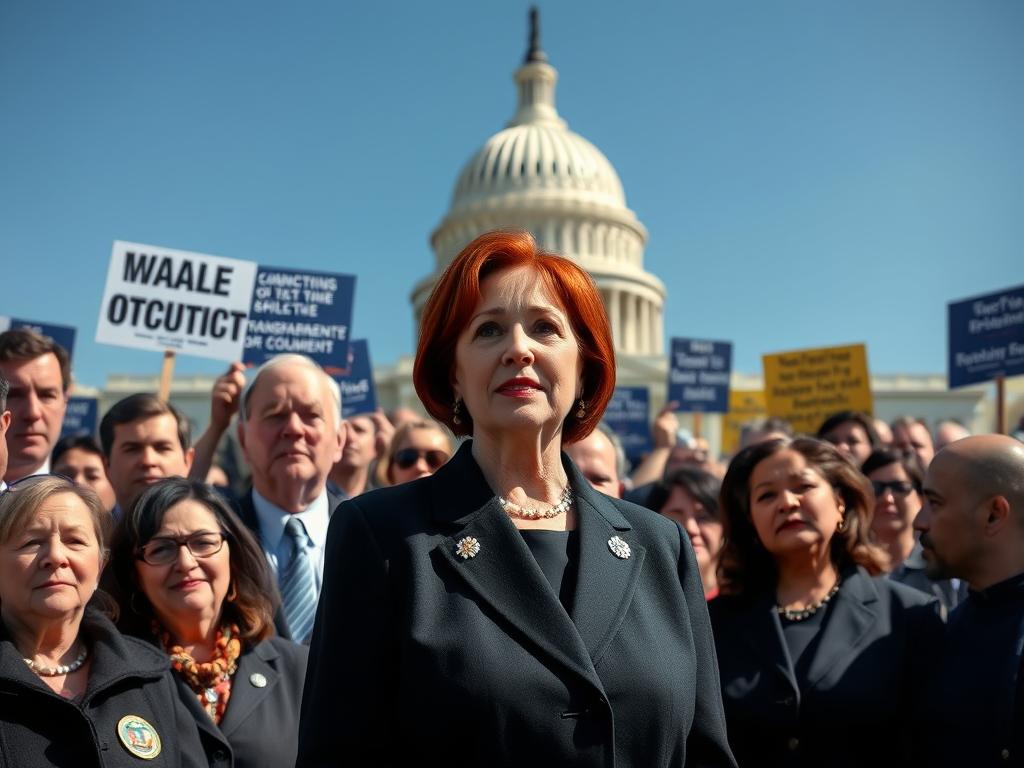
In a striking turn of events, Representative Marjorie Taylor Greene, known for her controversial stances and alignment with former President Donald Trump, took a stand with survivors of Jeffrey Epstein’s abuse outside the Capitol. This unexpected alliance came as the House prepared to vote on a bill aimed at unsealing crucial documents related to Epstein’s global network of exploitation. Greene’s presence at this gathering sparked considerable public interest, as it seemed to signal a pivot or, at the very least, a nuanced approach to addressing serious allegations head-on.
Flanked by fellow Republicans who have shown increased support for transparency regarding Epstein’s criminal activities, Greene’s participation is indicative of a broader, perhaps cross-party consensus about the need for justice and accountability. For these survivors, having congressional support can be a powerful statement of validation and acknowledgment of their long fight for truth. The bipartisan backing from other legislators hints at the gravity and potential ramifications of what these files could reveal.
The proposed legislation, which the House was set to vote on, seeks to peel back the layers of secrecy shrouding one of the most confounding and high-profile criminal cases in recent memory. Advocates argue that full disclosure could uncover the extent of wrongdoing and could possibly implicate high-profile individuals who have been shielded from accountability due to their status or wealth. Greene’s vocal support might also suggest a broader strategic alignment among Republicans to champion causes with significant public support.
While some critics question Greene’s motives, possibly seeing her actions as an attempt to realign her public image, there is no denying the powerful message it sends about unity in the face of heinous crimes. By standing with victims in such a public setting, Greene and her colleagues are signaling a willingness to challenge any and all involved in Epstein’s sordid affairs, regardless of political affiliations or previous alliances. This could mark a significant shift in how justice is pursued for Epstein’s victims.
In conclusion, the move by Representative Greene has not only cast a new light on her political posture but also on the bipartisan movement calling for transparency and justice. The outcomes of this proposed legislation could have far-reaching implications, offering hope for the survivors of Epstein’s abuse while challenging the systemic mechanisms that have historically protected powerful offenders. Ultimately, whether Greene’s actions are driven by personal conviction or political strategy, the potential for revealing the full scope of Epstein’s network remains a crucial step forwards in the fight for justice.